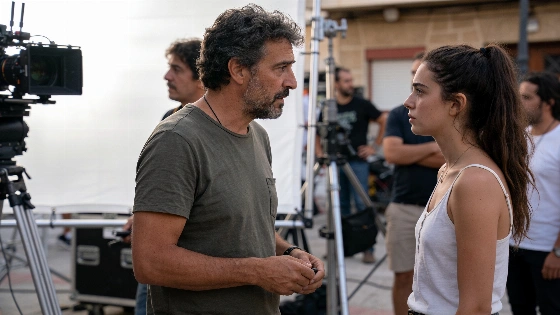
Javier Bardem stars as a renowned director who returns to Spain to film in the Sahara. The movie draws parallels between personal and political abandonment. The project highlights tensions around Spain’s relationship with Western Sahara.
Rodrigo Sorogoyen’s latest film, 'El ser querido', puts the spotlight on the intersection of personal and political rifts. Javier Bardem leads the cast as a celebrated film director who, after years of international success, comes back to Spain to shoot a period drama set in the Sahara. The project is not just a professional return; Bardem’s character seeks to reconnect with his estranged daughter, played by Victoria Luengo, whom he has not seen for years. This dual narrative allows Sorogoyen to use the backdrop of the Western Sahara to reflect on the theme of abandonment—both between a father and daughter and between Spain and its former territory.
In an interview with El Cine en la SER, Bardem addressed the film’s underlying political context, touching on Spain’s complex ties with Morocco and the Western Sahara. He pointed to recent events in Ceuta, where a surge of migrants crossed the border, as an example of how Morocco can exert pressure on Spain. Bardem argued that such incidents are not isolated but are linked to broader geopolitical strategies, including the unresolved status of the Sahara. He warned that yielding to Moroccan demands gives the neighboring country leverage over Spain, particularly through the control of migration flows. According to Bardem, this dynamic puts additional strain on Spain’s political system, which he described as one of the few remaining progressive democracies in an increasingly polarized Europe.
Despite his criticism of the government’s handling of the crisis, Bardem emphasized that the responsibility to restore stability in Ceuta remains with Spanish authorities. He called for immediate measures to ensure that residents of Ceuta can live without the persistent anxiety caused by such border incidents. The actor’s comments highlight the ongoing debate over Spain’s foreign policy and its domestic consequences, especially in regions directly affected by migration and diplomatic tensions.
The film’s release comes at a time when Spanish cinema is increasingly engaging with social and political issues. 'El ser querido' stands out for its willingness to address sensitive topics through the lens of family drama. This approach echoes a broader trend in Spanish culture, where filmmakers and artists are using personal stories to comment on national and international challenges. The choice to set the film in the Sahara is particularly significant, as it revives discussions about Spain’s historical responsibilities and the unresolved status of Western Sahara. For context, recent coverage of family tensions in Spanish public life, such as the story of the Rivera siblings and their private disputes, as reported in a previous article on family dynamics, shows how personal relationships often mirror broader societal conflicts.
Western Sahara remains a disputed territory, with its status unresolved since Spain withdrew in 1975. The region has been the subject of ongoing conflict and diplomatic maneuvering, involving Morocco, the Sahrawi people, and international actors. Spain’s position continues to be a point of contention both domestically and abroad. Films like 'El ser querido' contribute to public debate by framing these issues within relatable human stories, making the political personal and vice versa. As Spanish cinema evolves, such works are likely to play a growing role in shaping public understanding of the country’s most pressing challenges.