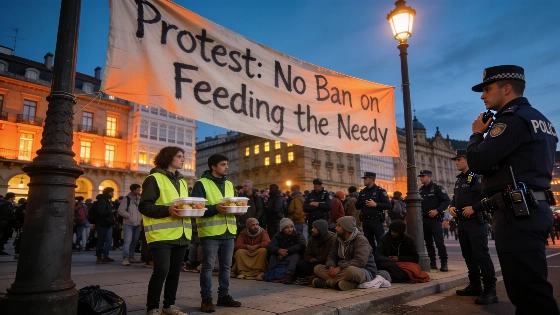
San Sebastián's mayor has abruptly banned volunteer-run street dinners for the homeless, citing hygiene and public order. Over 300 people lose access to nightly meals. The city promises expanded official support, but criticism mounts.
San Sebastián's city council has abruptly withdrawn permission for volunteer groups to distribute nightly meals to homeless residents, citing concerns over hygiene and public order. The decision, announced by Mayor Jon Insausti (PNV), immediately halts the so-called “cenas solidarias” that had provided food to hundreds of people at several city locations since 2020. From now on, only official municipal food programs will be authorized to serve those in need on the streets.
The move affects more than 300 people who regularly relied on the volunteer-run initiative Kaleko Afari Soliarioak, which began during the pandemic to address basic food needs for those living rough. Volunteers, who funded and prepared the meals themselves, operated at four key points across the city, including the Parte Vieja, Anoeta, and central squares. According to organizers, their support extended beyond food, offering help with transport, medical needs, and social services navigation.
Mayor Insausti justified the ban by pointing to a rise in neighborhood complaints and police interventions near distribution sites. He cited a 20% drop in crime in Egia after one such meal point was closed, while police callouts doubled at other active locations. The city argues that the ban is based on reports from public space, health, social action, and municipal police departments, all highlighting issues of cleanliness and neighborhood tension.
The decision has drawn sharp criticism from volunteers and opposition parties. Kaleko Afari Soliarioak accuses the mayor of yielding to pressure from the Partido Popular (PP), which has long campaigned against the street dinners, arguing they breach regulations and disrupt local life. The PP and PSE-EE, coalition partners in the city government, have both endorsed the ban. Meanwhile, EH Bildu and Sumar have condemned the move as unjustified and harmful to the city’s most vulnerable.
Volunteers say they were not consulted before the ban and warn that hundreds will be left without evening meals overnight. They demand the city immediately open additional social dining facilities and recognize the value of their work. In a letter to the mayor, volunteer Mariaje Etxabe rejected claims of persistent disorder or unsanitary conditions, insisting that incidents were rare and all waste was properly cleared after each meal service.
In response, the city council has pledged to increase its annual food assistance budget from €1.5 million to €2 million, aiming to provide 416 daily meals, up from the current 316. The expanded program will prioritize registered residents and those with at least three months’ local ties. Unlike the volunteer model, the municipal scheme issues meal vouchers redeemable at local bars and restaurants, rather than distributing food directly on the street.
This development in San Sebastián reflects broader tensions in Spain over how cities manage homelessness and public space. The debate echoes challenges seen elsewhere, such as the recent mass evacuations in Ávila and Madrid due to wildfires, where local authorities and volunteers also had to rapidly adapt support for vulnerable populations—an issue detailed in coverage of emergency shelter efforts in Talavera de la Reina. As Spanish municipalities continue to balance public order with social support, the outcome in San Sebastián may influence similar policies in other regions.
Homelessness remains a persistent challenge in Spain, with local governments often struggling to provide adequate services amid rising housing costs and social pressures. The shift from volunteer-led street meals to official voucher systems marks a significant change in how aid is delivered, raising questions about accessibility and the role of grassroots initiatives in urban welfare.