Prime Minister Pedro Sánchez convenes the National Security Council after nearly a month of tension in Ceuta. Over 80,000 migrants entered the enclave, leaving thousands stranded. The government faces pressure to restore order.
Prime Minister Pedro Sánchez has summoned the National Security Council for an urgent session this Tuesday, responding to the unresolved crisis in Ceuta that erupted at the end of July. The meeting comes 26 days after around 80,000 migrants crossed into the Spanish enclave, overwhelming local resources and leaving more than 5,000 people, including 2,500 minors, still on the streets. The situation remains critical, with no clear timeline for normalization.
The council will convene at 8:30 a.m., ahead of the first Cabinet meeting following the summer break. Ceuta’s president, Juan Jesús Vivas, will join remotely. The timing is significant, as it precedes a series of parliamentary hearings where ministers must explain the government’s handling of the crisis. Defense Minister Margarita Robles is scheduled to appear first, followed by the ministers of Justice, Health, Interior, Foreign Affairs, and Inclusion throughout the week. The Minister of Youth will testify the following Monday.
This high-level meeting is set against a backdrop of political tension. Interior Minister Fernando Grande-Marlaska has repeatedly denied the existence of a prior intelligence report from the Centro Nacional de Inteligencia (CNI) warning of a possible mass arrival, a stance that has drawn criticism and prompted a strong defense of the intelligence service by Defense Minister Robles. Grande-Marlaska later attempted to defuse the controversy, stating that not every incident implies direct responsibility.
The National Security Council, which advises the prime minister on matters affecting Spain’s security, will include Sánchez, vice presidents Carlos Cuerpo, Yolanda Díaz, and Sara Aagesen, as well as key ministers and senior officials such as the director of the CNI, Esperanza Casteleiro, and the Chief of the Defence Staff, Admiral Teodoro Esteban. The King, Felipe VI, may also preside if he chooses. The council typically meets at least every two months, but extraordinary sessions can be called when national security is at stake.
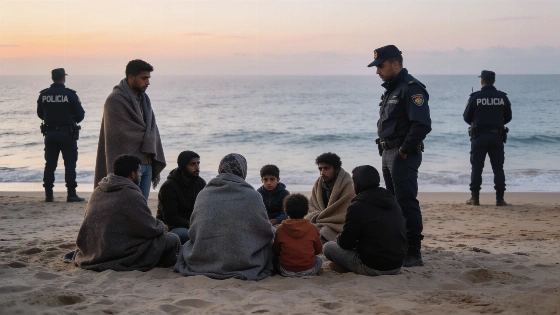
On Monday, several migrants remained camped on Ceuta’s El Trampolín beach, highlighting the ongoing humanitarian challenge. The crisis has also triggered a wave of political scrutiny, with the government preparing to defend its actions in Congress. As noted in a recent analysis by russpain.com, the unresolved influx has exposed deep divisions and forced the executive to confront tough questions from lawmakers.
The last time the National Security Council met was in April, when it approved the 2025 Annual Security Report. That document already warned of rising migratory pressure on Ceuta and Melilla, citing the dangerous trend of migrants attempting to swim around border fences. The report also noted a 43% decrease in arrivals compared to 2024, but warned about the spread of misinformation designed to stoke social tensions by linking migration to public insecurity.
Ceuta’s current predicament underscores the complexity of managing Spain’s external borders and the political risks involved. The city’s unique position as a gateway to Europe makes it a focal point for migration flows and a test case for national security policy. The government’s response in the coming days will be closely watched, both in Madrid and across the EU, as Spain seeks to balance humanitarian obligations with border control and public order.