The government faces criticism after the Supreme Court suspended voting rights for new citizens under the 'ley de nietos'. Sánchez blames the right for undermining democracy and calls for a quick resolution.
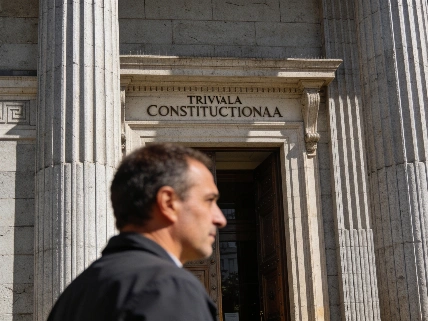
The Supreme Court's decision to suspend voting rights for thousands of new Spanish citizens under the 'ley de nietos' has sparked a sharp political dispute. The ruling blocks these citizens from joining the electoral register, drawing a strong reaction from Prime Minister Pedro Sánchez, who accuses the right-wing opposition of attacking democratic norms.
In an interview on TVE, Sánchez directly blamed Vox and the Partido Popular for what he called a coordinated effort to undermine trust in Spain's elections. He argued that the controversy goes beyond a legal technicality and is part of a broader attempt to cast doubt on the country's democratic process. Sánchez pointed to past opposition claims—such as allegations that train services were blocked to suppress votes—as examples of a pattern meant to erode confidence in elections.
The Supreme Court's suspension of voting rights for 'ley de nietos' citizens on September 8, 2026, is a provisional measure and does not revoke their citizenship status.
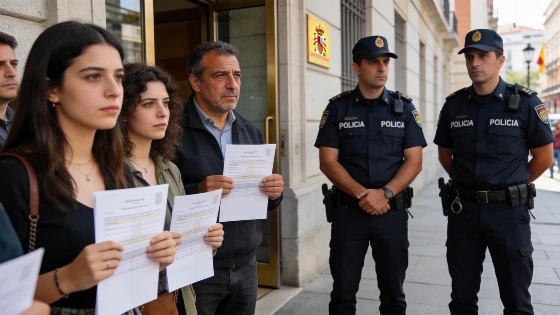
The 'ley de nietos', in effect since 2022, allows descendants of Spaniards to obtain citizenship. Sánchez noted that the Partido Popular benefited from overseas votes in 2023, gaining an extra seat, and that the electoral board had previously supported the law. Now, with the Supreme Court's intervention, the government is pushing for a quick resolution, arguing that basic rights are at risk. According to RTVE and other Spanish media, the legal challenge was brought by Vox and Iustitia Europa, and the court partially accepted their petition. The suspension affects those whose registration was based on presumed exile status, while people who have documented their descent from exiles keep their right to vote.
Outside the courts, Sánchez also addressed the situation in Ceuta, where a recent increase in migrant arrivals has heightened political tensions. He criticized the opposition's language, especially after Feijóo suggested military action to stop border crossings. Sánchez said those arriving in Ceuta are not invaders but people seeking better lives, pointing to the economic gap between Spain and Morocco. He questioned whether the opposition would have used force, contrasting his government's approach of processing and returning migrants with what he suggested would be a harsher response.
The government is preparing to transfer 500 minors from Ceuta, pending local approval, and plans to expand facilities to accommodate up to 6,000 migrants. Sánchez called for improved border management, intelligence, and infrastructure to prevent future crises and avoid people sleeping on the streets.
The Spanish government and state prosecutors opposed the suspension of voter registration for new citizens, arguing that it would deprive individuals of their constitutional right to vote. The restriction applies only to those whose registration was based on presumed exile status, not to all naturalized citizens under the law.
Sánchez also confirmed that preparations are underway for a royal visit to Ceuta and Melilla, though no date has been set. He dismissed speculation about the king's recent meeting with military leaders, calling it routine, and urged the Partido Popular to stop inflaming tensions and to support Ceuta, including by accepting minors in other regions.
He addressed a recent controversy over an Interior Ministry press report that categorized commentators by ideology. Sánchez distanced himself from the document, calling it a mistake but not significant, and reaffirmed the government's respect for media independence. He criticized the opposition for threatening to close media outlets or support far-right agitators, arguing that such actions are more damaging to press freedom.
On the political calendar, Sánchez ruled out holding multiple elections on the same day and did not say whether national elections would come before or after municipal ones. He promised the budget would be voted on before the end of the year and confirmed he plans to run again in 2027. He warned that a coalition with Vox would not be a normal change of government but a threat to social cohesion.
The debate over the 'ley de nietos' and the Ceuta border crisis has exposed deep divisions in Spain over national identity, migration, and who gets to participate in democracy. The Supreme Court's decision has left thousands of new citizens in limbo, while the government's response signals a determination to defend both legal rights and a more inclusive vision of Spain. As the opposition and government clash, the outcome will determine not only voting rights but also the direction of Spanish society amid growing polarization and outside pressures.