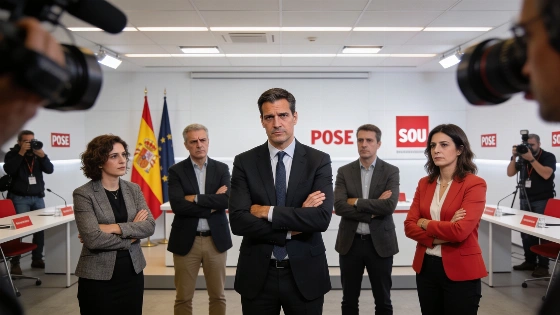
Pedro Sánchez avoided self-criticism at the PSOE Federal Committee, sidestepping judicial probes and recent electoral losses. He promised no 'super Sunday' elections but left the general election date unclear.
Pedro Sánchez, Secretary General of PSOE and Spain’s Prime Minister, entered the latest Federal Committee meeting under mounting pressure from within his own party. Despite a series of judicial investigations and four consecutive regional election defeats—including in traditional strongholds like Andalucía and Extremadura—Sánchez offered no self-criticism. Instead, he focused on minimizing the impact of ongoing corruption cases and called for party unity ahead of the crucial 2027 electoral cycle.
During his public remarks, Sánchez largely repeated arguments he had made days earlier in Congress, framing the legal troubles surrounding figures such as José Luis Ábalos and Santos Cerdán as isolated incidents involving “specific individuals who abused their positions.” He dismissed the origins of legal proceedings against his wife and brother as “falsehoods” and urged respect for the presumption of innocence in the case of José Luis Rodríguez Zapatero, who faces charges related to influence peddling and money laundering. Sánchez acknowledged progress in fighting corruption over the past eight years but admitted that eradicating it entirely from political life remains out of reach.
Behind closed doors, criticism was more direct. Emiliano García-Page, President of Castilla-La Mancha, and Miriam Andrés, Mayor of Palencia, were among the few to openly challenge Sánchez. Both urged that general elections be held before the municipal and regional votes in May 2027 to avoid a national backlash at the polls. García-Page called for clear boundaries to shield party members from the fallout of corruption scandals, while Andrés questioned the party’s reluctance to confront uncomfortable truths. Sánchez, in response, dismissed calls for an early end to the legislature, labeling dissenters as a “minority current” and linking them to previous opposition to his leadership and alliances with nationalist parties.
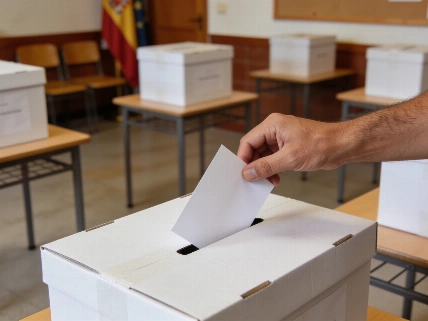
The only concrete commitment Sánchez made was to rule out a simultaneous “super Sunday” of general, regional, and municipal elections—a stance that reportedly received the most applause during the session. However, he gave no indication of whether he would call general elections in early 2027, when the government may struggle to pass the national budget, or wait until July as previously suggested in Congress.
Most interventions at the committee supported Sánchez, with party leaders like Pilar Alegría (Aragón) and the head of PSOE in the Balearic Islands acknowledging the damage caused by corruption but emphasizing the need for unity. Álvaro Sánchez Cotrina (Extremadura) warned against mere political survival and urged the party to avoid short-term tactics, while Javier García (La Rioja) called for greater government presence in the regions and better communication with local leadership. Among regional presidents, Salvador Illa (Catalonia) offered strong support, while Adrián Barbón (Asturias) voiced opposition to proposed changes in regional financing, citing concerns for his community. María Chivite (Navarra) was absent due to a wildfire emergency.
Following the meeting, the national leadership described the outcome as a “closing of ranks” around Sánchez, with the party preparing for a challenging 2027 in which it will defend three of its four regional governments and over 2,300 mayoralties. The committee unanimously approved the primary calendar for 2027 candidates and amended the party’s ethical code to include expulsion for prostitution consumption. References to Cerdán, Ábalos, and Leire Díez were limited to criticism of their actions, while some defended Zapatero in line with Sánchez’s position, without addressing the controversy over the jewelry case.
Internal party debates over corruption and electoral strategy are not unique to PSOE. Similar tensions have surfaced in other Spanish regions, as seen when Catalonia allocated €30 million to address social aid gaps in vulnerable neighborhoods—a move that highlighted the political stakes of welfare and transparency. For more on regional policy responses, see this report on Catalonia’s recent investment in social welfare outreach.
Spain’s political landscape remains volatile as parties navigate scandals, shifting alliances, and the approach of major elections. The PSOE’s handling of internal dissent and corruption allegations will likely shape its prospects in the coming years, especially as the party seeks to maintain control in key regions and respond to public concerns over integrity and governance.