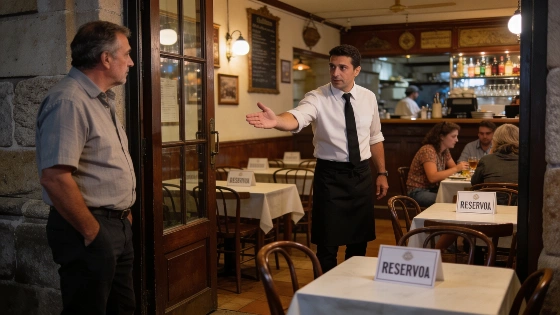
In Santiago’s historic center, locals now struggle to order a simple beer after 8 p.m. as bars block tables for dinner guests. Chef Alberto Lareo warns that favoring tourists over year-round residents could leave these venues empty once the high season ends.
By 8 p.m. in Santiago’s Casco Histórico, locals hoping for a quick beer often find every table off-limits. Many bars now turn away anyone not planning to order dinner, saving their seats for tourists and bigger spenders. Chef Alberto Lareo, who runs Maina, has spoken out against this trend, warning that chasing short-term profits could backfire when tourist season ends.
Residents who support these bars all year are being pushed aside for summer visitors. On A Vivir Galicia, callers described bars blocking tables as early as 7 p.m., with staff telling walk-ins that only diners are welcome. The message is blunt: if you’re not eating, you’re not staying.
On public hostels run by Xunta in Galicia, a night’s stay costs around €10, and the official Compostela certificate is issued free of charge, highlighting the city’s appeal to both budget pilgrims and upscale tourists.
This isn’t just happening at one or two places. While no bar is singled out by name, the pattern repeats across Santiago’s busiest tourist areas. Refusing to serve a simple caña in the evening has become a common complaint among locals, echoing earlier gripes about high terrace prices in the old town. The reason is clear—dinner guests spend more, especially in peak season.
But the fallout goes beyond a single night’s inconvenience. By focusing on tourists, these bars risk losing the regulars who keep them afloat during quieter months. Lareo’s warning is direct: “Que no se quejen cuando en enero estén vacíos.” In other words, when the crowds leave, the locals may not come back.
There are ways to balance business with community. Bars could be upfront about reservation policies, set aside space for quick drinks, or let customers know how long a table is available before dinner service. Instead, many have chosen to exclude regulars, forcing them to look elsewhere—even outside their own neighborhoods.
According to Radio Galicia/Cadena SER, the practice of reserving tables for dinner and refusing service to non-diners from as early as 7 p.m. is widespread in tourist zones like Casco Histórico. This reflects a broader tension between the city’s economic dependence on tourism and the daily life of residents, especially during the busy Camino de Santiago season.
The impact isn’t just about money. For many locals, bars and cafés are part of daily life—a place to meet friends, relax, and stay connected. When access is limited to those ordering full meals, the sense of community fades. Some residents are already shifting their routines to other neighborhoods where they feel more welcome.
No one knows exactly how many bars enforce these rules—there’s no official count—but the change is already visible in Santiago’s nightlife. Bars may see a profitable summer, but they risk losing long-term loyalty and steady business. As seen in previous reporting, short-term pricing tactics have already stirred up frustration among locals.
Choosing tourists over residents is a gamble. It might fill tables in July and August, but it could mean empty seats in January. For Santiago’s bars, the lesson is simple: loyalty takes more than one busy season, and ignoring regulars may leave them with plenty of empty chairs when the crowds are gone.