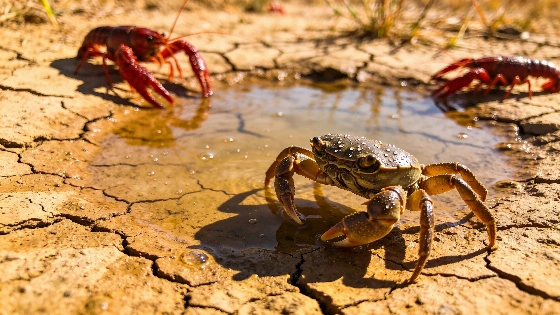
The Iberian river crab faces mounting danger as drought dries up its habitats, leaving populations stranded in overheated pools. Combined with deadly disease and invasive species, experts now see the crustacean’s future in Spain at risk.
In the headwaters and isolated streams of Spain, the Iberian river crab is fighting for survival as drought intensifies. This native crustacean, known scientifically as Austropotamobius pallipes, is now found in just 13 autonomous communities, with many populations fragmented and confined to shrinking pockets of water. According to the national conservation strategy approved in 2024, the species is officially listed as “Endangered” by the IUCN and protected under European habitat directives.
When river flows drop, crabs become trapped in small, rapidly warming pools. These conditions quickly reduce oxygen levels, increase competition for food, and expose the animals to predators. If the last pools dry up, entire local populations can vanish with no chance of recolonization. The Ministry for Ecological Transition warns that even minor water extractions can tip the balance in streams that barely flow during summer, making the situation especially precarious.
Multiple Threats
Drought is only part of the crisis. As water becomes scarce, native crabs are forced into closer contact with invasive species—particularly the American red swamp crayfish and the signal crayfish. Both invaders carry Aphanomyces astaci, the pathogen behind crayfish plague, which is almost always fatal to Iberian populations. While some individuals have shown partial resistance, the disease continues to devastate native stocks, complicating recovery efforts.
Genetic studies offer a glimmer of hope. Research published in 2023 by the Royal Botanic Garden and the National Museum of Natural Sciences (CSIC) analyzed over 1,200 samples from six European countries, revealing high genetic diversity in northern and central-eastern Spain. This diversity could be crucial for future breeding and reintroduction programs, though the species’ origins remain debated. A 2025 study from the Doñana Biological Station (CSIC) argued that Spanish populations may have Italian roots, identifying them as Austropotamobius fulcisianus. Despite these uncertainties, coordinated monitoring, invasive species control, emergency rescues during severe drought, and habitat restoration remain central to the national strategy.
How to Identify the Iberian River Crab
The Iberian river crab is typically brown, greyish, or olive on its back, with a lighter underside, including its legs and claws. Adults can reach up to 12 centimeters in length. In contrast, the signal crayfish is marked by a white or bluish patch near the claw joint, while the American red swamp crayfish is more vividly red, with spiny claws and a carapace covered in small bumps.
Unusual die-offs should be reported to environmental authorities. To prevent the spread of crayfish plague, it is essential not to move animals, water, or wet equipment between different waterways.
Context and Outlook
The plight of the Iberian river crab is part of a broader pattern affecting freshwater species across Europe. As highlighted by the recent recapture of a Patagonian toothfish after 13 years in Argentine waters—a story that underscores the importance of long-term monitoring and species resilience ()—the fate of native aquatic life often hinges on a delicate balance of environmental factors. For the Iberian river crab, the coming years will test whether conservation efforts can outpace the accelerating threats of drought, disease, and invasive species.