A new study from the Universitat Politècnica de Catalunya finds that myopia rates among children aged 8 to 12 have nearly tripled. The data points to a critical period for vision health and highlights disparities by gender and ethnicity.
Rates of myopia among Spanish children aged 8 to 12 have climbed sharply, information from new research from the Universitat Politècnica de Catalunya (UPC). The university’s Vision, Optometry and Health (VOS) group found that the share of children in this age group with myopia rose from 12.3% to 28.7% over three years. Among affected children, the average annual progression was 0.29 diopters, making the trend a impressive public health issue for families and schools.
The study focused on ages 8 to 12, when children’s eyesight is especially prone to change. More than 2,500 children in Barcelona were tracked through the Cohorte Infantil de Salud Visual de Terrassa project, which gathered long-term data not previously available in southern Europe. If the current pace continues, researchers warn, more teenagers could face severe vision problems in the coming years. Europa Press separately reported the results, highlighting the project’s scale and duration. A recent barometer in the Valencian Community found that 72.8% of children and adolescents have at least one diagnosed vision disorder, while 40.2% are already myopic, Europa Press Valencia reported.
The data points to several risk factors. Children who develop myopia earlier tend to see it progress more quickly and are more likely to reach high myopia (6 diopters or more) by adolescence. The study also found that girls with myopia had a faster increase in axial eye length, the basic anatomical cause of the condition, than boys. Children of non-Caucasian backgrounds began the study with a greater axial length at age 8, though their eye growth over time was similar to that of their peers. Expert commentary in El Economista and La Vanguardia links early onset and rapid progression to factors such as increased screen time and less outdoor activity. Spanish and European experts also identify screen time and limited outdoor exposure as basic risk factors. Preventive strategies emphasize early vision screening and regular eye exams, especially for children showing early signs of myopia, El Economista reported.
This research comes as Catalonia faces broader challenges in child health and education. Recent shortages in special education resources highlight the growing need to support children with a range of needs, including vision problems. The UPC study’s detailed data suggests that early intervention and regular monitoring could help many families. European reviews in 2026 have also identified myopia as a leading pediatric eye health issue, linking its rise to lifestyle changes and warning that, without action, a large share of the population could be affected by 2050.
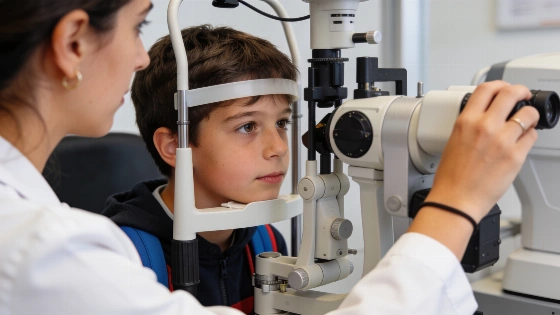
Myopia develops when the eye’s axial length, the distance from the cornea to the retina, grows too much, causing blurred distance vision. Early detection is impressive: children who become myopic at a younger age are at higher risk of rapid worsening and later complications. The study’s focus on gender and ethnic differences suggests that prevention strategies may need to be tailored for different groups.
Spain’s public health system faces the challenge of responding to a rapid and uneven rise in childhood myopia. The UPC data shows that the window for effective intervention is short. Without targeted screening and prevention, many children could face avoidable vision loss, the researchers’ findings indicate. The results call for coordinated attention across health care and education, with policymakers involved.