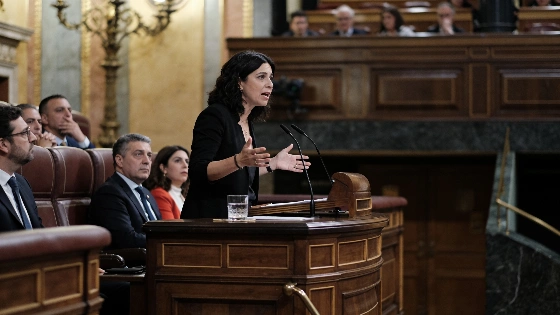
Minister Sira Rego defended the rights of migrant minors in Congress, confronting far-right and conservative criticism amid Ceuta’s overcrowding crisis. The debate exposed deep divisions over Spain’s migration policy and child protection.
Spain’s Minister of Youth and Children, Sira Rego, took a firm stance in Congress this week, directly confronting far-right and conservative narratives on the rights of migrant minors. Addressing the parliamentary commission, Rego refused to entertain arguments questioning whether children deserve rights, as the debate intensified over the recent influx of unaccompanied minors in Ceuta.
Rego’s appearance followed a surge of arrivals in Ceuta at the end of July, which left local shelters overwhelmed. According to her department, 1,478 children and adolescents are currently housed in facilities designed for far fewer, with the number exceeding capacity by a factor of 50. The minister stressed the urgent need to transfer minors to mainland Spain to ensure proper care and relieve pressure on Ceuta’s infrastructure.
During the session, Rego emphasized that children arriving in Ceuta are not “invaders” but individuals entitled to protection, many of whom have suffered abuse or violence. She warned against the criminalization of minors and rejected any normalization of racist or fascist positions in the political debate. Rego also underlined that family reunification remains a priority, but insisted that no child should be returned without being heard, highlighting the distinction between a rule-of-law state and autocracy.
Before the July crisis, Spain had already sent 600 case files to Morocco to verify the status of these minors, but had yet to receive a response. The minister’s remarks came amid mounting criticism from the right and far-right, with Vox’s Blanca Armario accusing the government of “cooperating with the invader” and holding Rego personally responsible for any future incidents involving migrants. The tone of the debate echoed recent political rifts in Ceuta, where, as reported in previous coverage by russpain.com, tensions have escalated over the handling of the migrant crisis and the response from different parties.
Other parties joined the criticism, with the PP’s Ana Alós denouncing what she called government “negligence” and “discoordination,” and linking the crisis to a supposed pull effect. Rego responded by detailing the government’s actions since July, including the launch of a €25 million emergency fund for the autonomous communities, despite explicit opposition from regions where Vox holds power over child welfare.
The minister outlined several proposals discussed with regional authorities: transferring 500 especially vulnerable girls through a dedicated organization, establishing bilateral cooperation agreements between regions, and exploring family foster care options. Of the minors currently in care, 760 are girls, with 233 under the age of 13.
Regional representatives highlighted the strain on their own systems. Junts’ Josep Maria Cervera argued that solidarity should account for the unequal realities faced by different regions, while the PNV’s Nerea Renteria called for stable funding to ensure quality care. From the Canary Islands, Cristina Valido criticized the lack of solidarity among regions and urged for a more constructive debate.
Spain’s approach to unaccompanied migrant minors remains a contentious issue, with the Ceuta crisis exposing both the limits of existing infrastructure and the deep political divides over migration and child protection. The situation in Ceuta is not isolated; similar challenges have emerged in other border regions, reflecting broader European debates on migration, responsibility-sharing, and the rights of vulnerable children. The government’s emergency measures and calls for regional cooperation signal an attempt to balance humanitarian obligations with practical realities, but the path forward remains fraught with political and logistical obstacles.