The Ceuta crisis has triggered a rare public split within Spain’s ruling PSOE. Local socialist leaders are now openly defying Pedro Sánchez, exposing deep fractures ahead of next year’s elections.
When socialist councillors in Seville joined the PP and Vox to support a motion critical of the government’s response to the Ceuta crisis, it signaled a shift that party headquarters could no longer write off as isolated unrest. This wasn’t just a symbolic gesture—it was a direct challenge to Pedro Sánchez from inside his own party, and it happened in one of Spain’s largest cities.
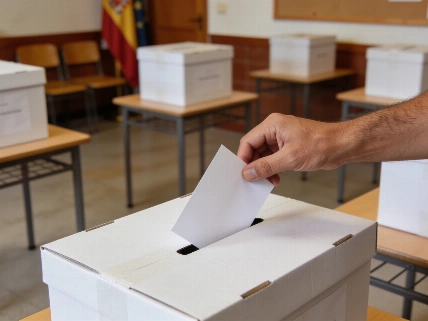
The motion, backed by the PSOE group in Seville’s city council, called for stronger defense of Spanish sovereignty over Ceuta and Melilla, more resources for border protection, and guarantees for residents’ rights and freedoms. This was a public alignment with the opposition’s demands, putting the party’s internal divisions on display. According to Spanish media, the PSOE’s federal leadership had tried to keep its officials away from events related to the Ceuta crisis, but local leaders and mayors from cities like León, Mérida, Chiclana de la Frontera, Moguer, and Espartinas ignored these instructions and organized or joined solidarity actions anyway.
Africanews
Antonio Muñoz, the socialist spokesperson, tried to play down the political fallout, saying the vote was meant to avoid falling into a “provocation” by the PP. But the reality is harder to contain: the main opposition group in a major city has now openly supported a PP initiative that questions the government’s crisis management.
This is just the latest in a series of splits that have been building since late August. The unrest is concentrated among municipal leaders—those facing voters soon and pushing for early elections. Ferraz’s authority was already tested on September 2, when the federal leadership told its officials not to join rallies organized by the Federación Española de Municipios y Provincias (FEMP), suspecting the PP of using the Ceuta crisis to mobilize against Sánchez. The directive, signed by María Jesús Montero, Rebeca Torró, and Juan Francisco Serrano, failed to keep local leaders in line. Socialist mayors from León, Mérida, Chiclana de la Frontera, Moguer, Espartinas, and dozens of other towns either joined solidarity events for Ceuta or organized their own.
In Andalusia, several PSOE-run municipalities held alternative demonstrations to distance themselves from the PP’s initiative without leaving the streets. Some mayors went further. José Antonio Díez of León argued the response should go beyond party lines. Gustavo Cuéllar in Moguer defended mayoral autonomy over party discipline. In Chiclana, José María Román joined the mobilization despite Ferraz’s objections. The number of people remaining in Ceuta has also become a point of dispute: local authorities estimate around 13,000, while central government figures are much lower, according to national outlets.
Reuters
At first, the party’s national leadership tried to minimize these acts. Montse Mínguez, the PSOE spokesperson, described them as the work of “free spirits” in an otherwise united organization. But the Seville vote is different. This wasn’t just about attending a rally or shifting the timing to avoid overlap with the PP. Socialist councillors actively endorsed a motion that directly criticized the central government’s handling of the crisis.
The Ceuta issue remains on the national agenda. On the same day as the Seville vote, Congress approved €309 million in aid for the autonomous city, while the fate of unaccompanied migrant minors is still unresolved. According to the Spanish government, the crisis is now seen as a long-term management issue, with Prime Minister Pedro Sánchez hoping to stabilize the situation by year-end.
For Ferraz, the challenge is now clear. The national strategy against the PP is harder to enforce on local leaders who have their own electorates, their own political calendars, and now, less hesitation about making disagreements with Sánchez public. The party’s internal cohesion is being tested as municipal elections approach.
As the rift widens, the Ceuta crisis has become more than a border dispute—it’s now a test of leadership and discipline within Spain’s ruling party. The willingness of local PSOE officials to defy Ferraz signals a shift in the balance of power, one that could have lasting consequences for Sánchez’s hold on the party. In a political climate where public figures are increasingly willing to break with the party line, as seen in other recent stories such as the reported earlier about Tamara Falcó’s candid reflections, the PSOE’s internal debate over Ceuta is a clear warning: local realities and electoral pressures are now driving the agenda, not just directives from Madrid.