In Soria, traditional village houses have quietly mastered climate control for centuries. Their thick stone walls, strategic layouts, and natural materials shield residents from both freezing winters and scorching summers—without modern energy or environmental cost.
Winter in Soria bites hard. Summer scorches. Yet inside the old village houses, the air stays steady. These homes, built long before electricity, keep their cool in July and hold warmth in January. No air conditioning. No central heating. Just stone, earth, and straw—used with skill.
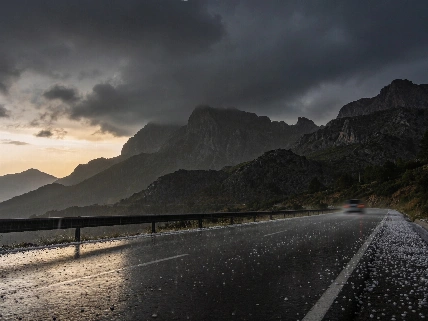
Measured data from the La Riba de Escalote station, reported by AEMET, shows just how wild Soria’s climate can get. The station sits at 1042 meters. It logs hourly, daily, and extreme temperatures. These numbers matter. They cut through myths and show the real challenge of living here.
Academic research from the University of Granada highlights that cave and rock-cut dwellings in Spain are specifically adapted to extreme temperatures and low rainfall, offering notable energy efficiency and a reduced ecological footprint.
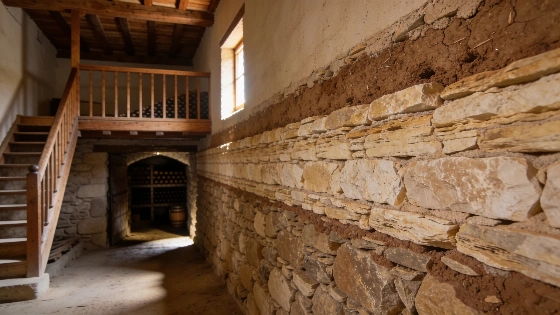
The walls do the heavy lifting. Builders used limestone, rough stone, or schist. Sometimes they mixed in adobe and rammed earth, packed with straw. Some walls are 80 centimeters thick. That’s a lot of mass. It soaks up heat and lets it out slowly. The result? Inside, the temperature barely flinches, even when it swings wildly outside. The walls act as both armor and battery.
But mass alone isn’t the trick. The layout matters too. Upstairs, a desván attic traps air. It shields the rooms below from the roof’s heat or cold. Down below, a bodega dug into the earth stays cool all year. It steadies the floor above. In summer, it’s a refuge. In winter, it gives off a gentle warmth.
Nothing is random. Builders watched the sun. They set houses to catch winter light and block the worst of the summer glare. Thick walls, smart orientation, and stacked spaces work together. Heraldo-Diario de Soria calls it a home that “climatizes itself.” No carbon footprint. No wasted energy.
While the thermal inertia of massive stone and earth walls is a scientifically recognized mechanism for smoothing daily temperature swings, available studies do not provide independent measurements of interior temperatures in Soria’s village houses or confirm year-round comfort without heating or cooling.
Modern homes chase comfort with machines. Rural Soria did it with design. These houses use almost no energy. They work with nature, not against it. Urban apartments, like those in a recent Madrid case, face rising costs and waste. Soria’s old homes avoid that trap.
This isn’t just nostalgia. It’s a plan for the future. As climate swings get worse, these thick-walled houses show what real resilience looks like. The proof is in the stone. True sustainability is built in from the start.