The Spanish government is set to expand smoke-free zones, including outdoor terraces and public events, under a new anti-tobacco bill. The proposal also tightens rules on vaping and increases fines, but enforcement will only begin after parliamentary approval.
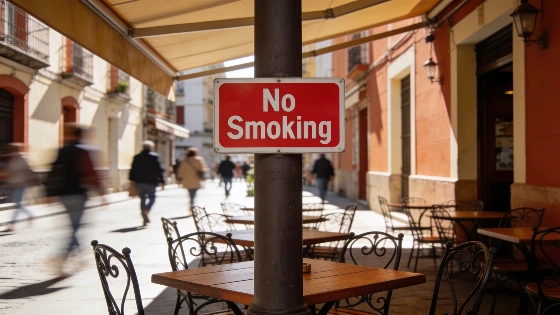
Smoking on outdoor terraces at bars and restaurants, as well as in public pools, sports facilities, and national parks, could soon be banned across Spain. The government has approved a draft anti-tobacco law that aims to dramatically widen smoke-free areas and impose stricter controls on vaping and nicotine products. However, these changes will not take effect immediately, as the bill must still pass through the full legislative process in parliament.
The proposed law, which the Council of Ministers plans to send to Congress on July 21, marks a significant step in Spain’s ongoing efforts to reduce tobacco use and protect non-smokers from secondhand smoke. If enacted, the ban would apply to all types of terraces—whether open or covered—at hospitality venues, as well as to collective swimming pools, outdoor sports venues, national parks, concerts, open-air theaters, cinemas, and other public events.
Legislative Hurdles Ahead
While the government’s approval signals a clear policy direction, the restrictions will not be enforced until the bill completes its journey through the Cortes Generales. Lawmakers will have the opportunity to propose amendments and debate the details, meaning the final version could still change. Only after publication in the Official State Gazette will the new rules become binding for businesses and the public.
This legislative push is part of the , which seeks to lower smoking rates and limit exposure to tobacco smoke and aerosols. According to the latest EDADES 2024 survey, 25.8% of Spaniards aged 15 to 64 smoke daily—a figure the government hopes to reduce with these new measures.
Expanded Smoke-Free Zones
The draft law introduces a 15-meter smoke-free perimeter around entrances to public buildings, hospitals, schools, universities, social and cultural centers, museums, libraries, and children’s playgrounds. This expansion is designed to protect vulnerable groups and discourage smoking in areas frequented by families and young people.
Importantly, the law also extends many of the same restrictions to electronic cigarettes, herbal smoking products, and other devices that mimic tobacco use. While nicotine pouches will be exempt from some consumption limits, their sale and access by minors will remain tightly regulated.
Vaping, Minors, and Tougher Penalties
Under the new rules, the sale and use of e-cigarettes and related products will be limited to specialized shops, and anyone under 18 will be barred from purchasing or consuming them. Parents or guardians could be held financially responsible for fines incurred by minors. The bill also raises penalties for minor infractions, with fines ranging from €200 to €600.
As the debate over tobacco control continues, the government is also moving to ban all forms of advertising, promotion, and sponsorship for tobacco and related products. This includes online marketing, indirect promotions, and any signage visible from outside retail outlets. The law will revive the Observatory for Tobacco Prevention, tasked with monitoring trends and coordinating public health efforts.
What’s Not Included—Yet
Notably, the initial draft does not mandate plain packaging for tobacco products or ban single-use vapes, though these measures could be added during parliamentary negotiations or through future EU regulations. The evolving legal landscape reflects broader concerns about youth exposure to nicotine and the long-term health costs of smoking.
Spain’s approach to tobacco regulation comes amid wider debates about public health and personal choice. The country has previously faced challenges in balancing regulation with individual freedoms, as seen in other policy areas such as education. For example, the pressures Spanish teenagers face when choosing a university degree after Selectividad have been explored in depth in .
As the anti-tobacco bill moves through parliament, its final shape will depend on political negotiations and public input. For now, Spain is poised to join a growing list of European countries taking a tougher stance on smoking in public spaces, with the goal of safeguarding health and reshaping social norms around tobacco use.