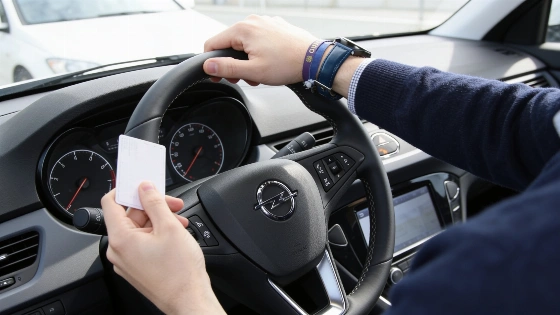
From 2028, Spanish drivers will transition to a digital EU-wide driving licence, ending the need to carry a physical card. The reform brings stricter rules for new drivers, unified penalties, and updated medical checks across Europe.
Spanish motorists face a major shift as the European Union moves to standardize driving licences across all member states. By 2028, Spain will adopt a digital-only driving licence, making the traditional plastic card a thing of the past for most drivers. The new system, approved by the European Parliament and formalized in Directive (EU) 2025/2205, aims to streamline rules, improve road safety, and reflect the realities of modern mobility.
Digital Licence Takes Center Stage
The most visible change is the introduction of a digital driving licence, which will be recognized in every EU country and stored on a mobile device. This digital credential will be integrated into the European digital identity framework, allowing drivers to prove their right to drive without carrying a physical card. While the digital version will become the default, Spain will still allow drivers to request a traditional card if they prefer, which must be issued within three weeks.
The EU expects all member states to have the digital licence fully operational by the end of 2030. The move is designed to simplify cross-border travel and enforcement, making it easier for authorities to verify licences and for drivers to comply with local laws.
New Validity Periods and Medical Checks
Under the new rules, standard car and motorcycle licences will be valid for up to 15 years, though countries like Spain may reduce this to 10 years if the licence also serves as a national ID. Licences for trucks and buses will have a five-year validity. For older drivers, member states can impose shorter renewal periods to ensure more frequent medical checks or refresher courses.
Medical requirements are also being updated. Before obtaining or renewing a licence, drivers must undergo an assessment focused on vision and cardiovascular health. However, countries may opt for self-assessment or alternative national procedures instead of mandatory medical exams.
Stricter Rules for Young Drivers
For the first time, the EU will enforce a minimum two-year probation period for new drivers, during which stricter penalties apply—especially for offences involving alcohol, drugs, or seatbelt violations. Member states can introduce zero-tolerance policies for alcohol and drugs among novice drivers.
Another significant change allows 17-year-olds to obtain a category B licence, provided they drive under supervision until turning 18. For professional licences, the minimum age will be 18 for trucks and 21 for buses, subject to completion of required training. Without the relevant professional certificate, higher age limits will apply.
Driving tests will place greater emphasis on road safety topics such as blind spots, driver assistance systems, safe door opening, and distractions from mobile phones. Training will also focus more on protecting vulnerable road users, including pedestrians, children, and cyclists.
Unified Penalties Across Europe
The reform introduces a unified penalty system, allowing authorities to withdraw a driver's licence for serious offences committed in any EU country. This means a ban in one member state will apply throughout the EU, closing loopholes that previously allowed offenders to continue driving elsewhere. Offences leading to disqualification include driving under the influence, causing fatal accidents, or exceeding speed limits by a wide margin—such as driving 50 km/h over the legal limit.
These changes come as part of a broader push to modernize European transport policy. As stricter vehicle inspections and emissions standards are also being rolled out, as seen in Spain's response to new Euro 7 rules (Spanish authorities tighten vehicle inspections), the digital licence is set to become a cornerstone of safer, more unified roads across the continent.
For Spanish drivers, the transition will mean adapting to new technology and procedures, but also gaining the convenience of a single, recognized licence for all of Europe. The reform is expected to reduce bureaucracy, improve enforcement, and make cross-border travel simpler for millions of motorists.