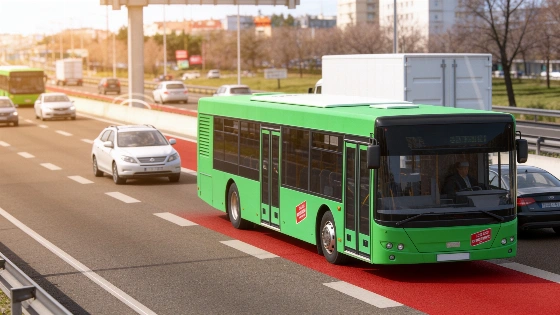
The DGT is piloting red-painted lanes on the A-2 to prioritize buses and vehicles with multiple occupants during peak hours. Drivers must follow new rules and signals to avoid fines as the system adapts to real-time traffic.
On the A-2 motorway between Avenida de América and Torrejón de Ardoz, drivers are now encountering a striking new feature: red-painted lanes that signal a major shift in how Spanish roads are managed during rush hour. The Dirección General de Tráfico (DGT) has launched a pilot program that temporarily converts the leftmost lane into a dedicated corridor for buses, motorcycles, and high-occupancy vehicles, aiming to ease congestion without building new infrastructure.
Unlike traditional Bus-VAO lanes, these red lanes have no physical barriers. Instead, their operation relies on a combination of colored road paint, illuminated beacons, and dynamic overhead panels. The system is designed to be flexible, activating only during periods of heavy traffic and reverting to normal use at other times. This approach allows authorities to maximize existing road space while minimizing construction and disruption.
Key to the system are the luminous beacons embedded in the asphalt and the variable message signs above the roadway. When the beacons glow green, drivers eligible to use the lane—such as those in buses or cars with multiple occupants—can enter or exit at designated points. If the lights switch to amber, entering or leaving the lane is strictly prohibited until the next authorized zone. When the beacons are off, the lane returns to general use, unless otherwise indicated by the overhead panels.
Importantly, the red color of the asphalt does not mean a permanent restriction. Drivers must always check the current status on the panels and beacons before entering. During the trial phase, the red lane operates from 7:00 to 9:00 in both directions, and from 15:00 to 17:00 outbound from Madrid, though these hours may change as the experiment continues. The DGT urges motorists to pay close attention to the signage at all times, as rules can shift depending on real-time traffic conditions.
Because there are no concrete dividers, the risk of accidental entry is higher than with traditional Bus-VAO lanes. Drivers must be vigilant: using the lane without meeting the requirements, or changing lanes when not permitted, is considered a serious offense. The standard fine for improper use is €200, reduced to €100 for prompt payment, but no license points are lost. Cameras and automated systems monitor compliance, checking both vehicle type and occupancy.
To avoid penalties, motorists should never rely solely on the color of the pavement. Before entering a red lane, they must confirm its active status, ensure their vehicle qualifies, and only use the designated entry and exit points when the beacons are green. Ignoring these rules can quickly lead to fines, as the DGT’s enforcement is both automated and strict.
This dynamic approach to traffic management is part of a broader trend in Spain, where authorities are seeking smarter, more adaptable solutions to urban congestion. The red lanes are expected to extend further along the A-2, potentially reaching Alcalá de Henares if the trial proves successful. As the DGT continues to refine the system through August and early September, drivers are encouraged to familiarize themselves with the new signals and procedures.
For context, the DGT’s evolving enforcement strategies have previously sparked debate, such as when automated systems fined emergency vehicles during urgent operations—a situation explored in detail in this recent report on traffic fines for police patrols. The current red lane experiment reflects the agency’s ongoing efforts to balance efficiency, safety, and fairness on Spain’s roads.
As urban mobility challenges grow, the outcome of this pilot could shape how other Spanish cities manage their busiest routes. For now, the message is clear: pay attention to the signals, know the rules, and adapt to a more dynamic road environment.