A sweeping reform of Spain’s traffic code will take effect on October 1, 2026, introducing stricter rules for overtaking cyclists, new safety gear requirements for motorcyclists, and obligations for e-scooter riders. Even experienced drivers will need to update their knowledge to avoid costly fines.
From October 1, 2026, Spain’s roads will operate under a dramatically revised set of rules. The new Real Decreto 518/2026, approved by the Council of Ministers and published in the BOE, brings the most significant changes to the Reglamento General de Circulación in decades. The reform targets not only new drivers but also millions who have held their license for years, with a focus on protecting vulnerable road users and tightening safety standards for all.
Carlos Almagro, a veteran instructor at Autoescuela Almagro, warns that relying on old habits could prove costly. “If you already have a license, you can’t assume what you learned years ago still applies,” he cautions. Almagro describes the reform as the most substantial shift he’s seen in over twenty years of teaching, emphasizing that ignorance of the new rules will not shield drivers from penalties.
Key Changes for Drivers
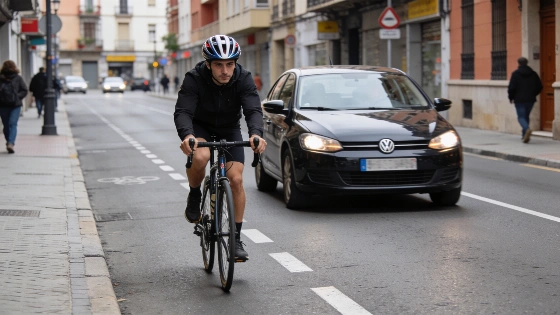
One of the most impactful updates concerns overtaking cyclists outside urban areas. Drivers will be required to reduce their speed by at least 20 km/h below the posted limit before and during the maneuver. For example, on a 90 km/h road, overtaking must not exceed 70 km/h. The minimum lateral distance of 1.5 meters remains, but if there are multiple lanes in the same direction, the driver must fully change lanes to pass.
Within city limits, a new rule obliges motorists to maintain at least five meters of distance behind any bicycle traveling in the same lane. Cyclists, meanwhile, are encouraged to ride in the center of the lane when it is safe, and local councils may allow two-way cycling on single-lane streets limited to 30 km/h or less.
New Obligations for E-Scooters and Motorcycles
For the first time, the law sets clear requirements for users of personal mobility vehicles such as electric scooters. Riders under 15 are banned, and all users must wear a helmet, signal turns with their arm, and use a light or reflective element visible from 150 meters at night or in poor visibility. While professional users must wear a reflective vest, private individuals are exempt. Lights must be on at all times from October 2027, and all e-scooters must be registered and insured under separate regulations.
Motorcyclists and moped riders face new safety gear mandates: protective gloves are now compulsory on interurban roads, and closed footwear is required everywhere. Motorcycles may use the right shoulder during traffic jams if the section is marked, traffic is stopped, and speed does not exceed 30 km/h. A reflective vest becomes part of the mandatory kit. Fines of €200 will apply for breaches such as missing helmets, gloves, or proper footwear.
Why Updating Matters
Almagro stresses that while new drivers will learn these rules as part of their training, those already on the road must take personal responsibility to stay informed. There is no new exam for existing license holders, but all drivers will be held to the updated standards from the moment the law takes effect. The reform’s main goal is to reduce accidents involving vulnerable users—pedestrians, cyclists, motorcyclists, and e-scooter riders—who are now explicitly defined in the code.
Before October arrives, drivers should review the official text in the BOE to ensure they understand the specific requirements for their vehicle and situation. Fines will vary depending on the infraction, but the risk of being caught out by an unfamiliar rule is real. The government’s approach mirrors other recent safety initiatives, such as the mandatory V16 emergency beacon, and reflects a broader push to modernize Spain’s road safety framework.
As Spain faces mounting challenges in road maintenance and safety, including the urgent need for infrastructure repairs highlighted in recent reports on the country’s €13.5 billion road repair crisis, the new regulations are part of a wider effort to adapt to changing mobility patterns and protect all who share the road.