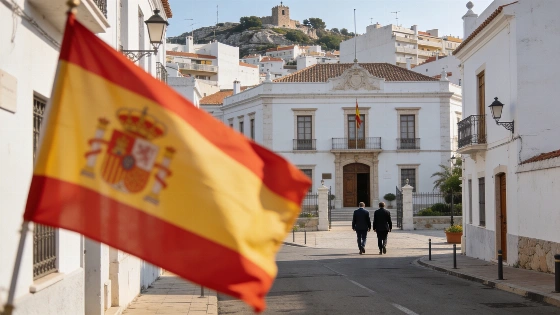
Felipe VI and Queen Letizia will visit Ceuta and Melilla on 13 and 14 October, just after Spain's National Day. The trip follows a summer border crisis and comes nearly nineteen years after the previous royal visit.
The Royal Household confirmed the dates on Thursday 1 October. Felipe VI and Queen Letizia will travel to Ceuta and Melilla on 13 and 14 October, their first official visit to both cities as reigning monarchs. The trip will come nearly nineteen years after Juan Carlos I and Queen Sofía last went there. Dates are set.
The journey was agreed after weeks of talks between Casa Real and the Spanish government. Prime Minister Pedro Sánchez had told Congress on 3 September that the King and Queen would visit the cities in the following weeks. He said the trip would show the state's absolute commitment to Ceuta and Melilla.
Spain's public broadcaster RTVE and the EFE news agency reported that the final itinerary had been agreed between Casa Real and the executive. The detailed programme would be announced later.
The detailed programme for the 13–14 October journey had not yet been released when the dates were confirmed; the trip itself had already been agreed between the Royal Household and the Spanish government.
The announcement now fixes the dates.
The timing carries extra weight because Ceuta faced a border crisis on 30 and 31 July. A mass border assault involved people arriving from Morocco. The Royal Household has stressed that preparations for the journey began before those events. It has not presented the visit as a trip created in response to the crisis.
Felipe VI had already told Ceuta's president, Juan Jesús Vivas, that he intended to visit. The two men met at the Marivent Palace in Palma on 6 August, only days after the border assault. The King raised Ceuta again at the gala dinner for French President Emmanuel Macron and his wife, Brigitte Macron.
According to AFP, the royal visit will take place more than two months after the mass arrival of migrants in Ceuta in July 2026. That interval gives the journey an additional border and migration dimension, even though preparations had begun before the crisis.
During that address, the monarch called the mass entry across what he described as a Spanish and European border unacceptable. He linked the episode to security, public order and humanitarian pressures. He also said European Union member states should strengthen cooperation and resources. Countries on the EU's external frontier, he argued, cannot carry that responsibility alone.
The autumn calendar is tight. The King and Queen are due to travel to Finland on 5 and 6 October. Spain's National Day falls on 12 October, so the Ceuta and Melilla visit will begin the next day. Other major public appointments are also scheduled, including the future Goya ceremony in Pamplona described in an earlier report.
The previous royal journey to the two cities took place on 6 and 7 November 2007. Juan Carlos I and Queen Sofía were welcomed by thousands of residents. Morocco reacted by recalling its ambassador in Madrid for consultations, and protests were organised against the visit.
The precedent matters. Ceuta and Melilla are Spanish autonomous territories, but Morocco maintains claims over them. Every royal journey there is therefore politically sensitive. The coming visit will speak directly to residents while also carrying the weight of state policy.
The timing puts Ceuta and Melilla clearly inside Spain's national agenda after a summer of border pressure. The trip does not remove the diplomatic sensitivity around the cities. It was not announced as a new response to the July events.
Its meaning lies in the timing and in the continued support of the monarchy and the government. For residents, Felipe VI's presence will be the first official royal visit since his accession twelve years ago. For Madrid and Zarzuela, it signals that the two cities will not be treated as peripheral.