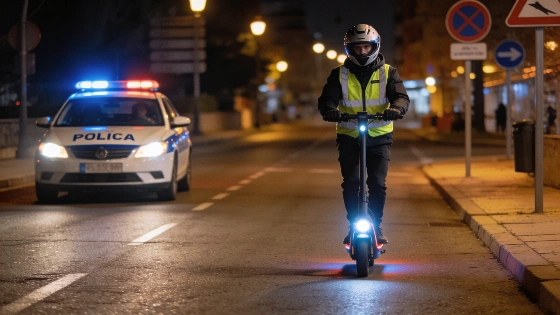
Spain introduces sweeping changes to road safety rules. Scooter riders face new gear requirements at night. Motorcyclists must wear gloves and closed shoes at all times.
Spain is set to overhaul its road safety regulations, introducing mandatory helmets, reflective vests, and lights for users of electric scooters at night. The new rules, approved by the Council of Ministers, will come into force from October 2026, with some provisions delayed until 2027. The changes are aimed at protecting what authorities call “vulnerable road users,” a group that includes pedestrians, cyclists, motorcyclists, and those using personal mobility vehicles such as scooters.
Under the updated regulations, anyone riding a scooter must be at least 15 years old. At night or in poor visibility—such as rain, fog, or sandstorms—scooter users will be required to wear a helmet and a reflective vest, and keep their lights on at all times. For those using scooters professionally, these safety measures will be mandatory at all hours. Failure to comply will result in a €200 fine. Outside urban areas, scooters will only be allowed on segregated lanes, such as cycle paths, and not on main roads.
Cyclists also face stricter requirements. On interurban roads and for professional riders, helmets and reflective vests become compulsory, with the same €200 penalty for violations. In cities, cyclists will be permitted to ride in the center of the lane to improve safety, and drivers of motor vehicles must maintain a minimum five-meter distance when following them. When overtaking cyclists on single-lane roads, cars must use the opposite lane and leave at least 1.5 meters of lateral space, reducing speed by at least 20 km/h below the limit.
Motorcyclists will see significant changes as well. Both drivers and passengers must wear protective gloves and closed footwear at all times. Non-compliance will incur a €200 fine. Additionally, helmets for moped users must now be officially approved, not just certified. Riders working in delivery or courier services must wear reflective vests at all times. Motorcycles will be allowed to use the right shoulder during traffic jams, provided they do not exceed 30 km/h and the section is properly marked.
Professional drivers—including taxi, freight, and driving school instructors—will be required to wear seat belts at all times, with exceptions only for emergency medical transport. On interurban roads, drivers must leave at least 1.5 meters when passing stationary vehicles involved in accidents, breakdowns, or maintenance, and reduce speed by at least 20 km/h below the posted limit. Pedestrians walking on interurban roads at night or in low visibility must wear reflective elements, especially on highways and motorways.
Additional measures include a ban on overtaking during snowfalls on highways and motorways, with all vehicles required to keep the left lane clear for emergency services and snowplows. In traffic jams, vehicles moving at walking speed or stopped must leave a central emergency corridor for police and rescue vehicles. Urban traffic lights will be adjusted so that amber flashing lights for vehicles do not coincide with green lights for pedestrians. The new rules also define “safe school routes” as specially designated paths for children to walk, use public transport, or non-motorized mobility to reach schools.
Motorhomes will face new parking restrictions: they cannot extend awnings or other elements beyond their perimeter, must rest on their tires, and are prohibited from discharging fluids onto the ground. The new regulations will be phased in, with lighting requirements for scooters and helmet approval for motorcyclists taking effect in October 2027. The rule on homologated protective gloves will only apply once technical standards are set by ministerial order; until then, current gloves remain acceptable.
For victims of road accidents, the Dirección General de Tráfico (DGT) offers a dedicated helpline (018), providing information and support in over 50 languages, available daily from 8:00 to 21:00. Contact is also possible via WhatsApp or email. These changes reflect a broader shift in Spanish traffic policy, moving from a vehicle-centered approach to one focused on the safety of all road users, especially in urban environments. According to official data, Spain has seen a steady increase in the use of personal mobility vehicles in recent years, prompting authorities to adapt regulations to new mobility trends and urban realities.