Spain’s central election board will send 29N papers to all CERA registrants, though a Supreme Court suspension bars some from voting. Consular certificates can preserve eligibility for people who meet the ruling’s test.
Voters abroad no longer need to request ballots in advance under Spain’s former voto rogado system.
The Junta Electoral Central, or JEC, has agreed to send electoral papers to everyone registered in the Censo Electoral de Residentes Ausentes, known as CERA. The board warns that the Supreme Court’s suspension prevents some registrants from voting.
More than 160,000 people on the register acquired Spanish nationality through the Ley de Memoria Democrática. According to JEC sources cited by RTVE, the papers must reach those who are not affected by the Supreme Court’s order.
The ruling draws a narrow line. It concerns a specific route to nationality under the first paragraph of Additional Provision 8 of Spain’s Law 20/2022 on Democratic Memory, rather than everyone naturalised under the law. Some people covered by the suspension can still vote if consular officials certify, under their own responsibility, that they meet the court’s conditions.
That certificate must confirm that, by 1 August 2026, the person had obtained nationality by documenting that they were the child or grandchild of exiles for reasons covered by the Ley de Memoria Democrática. The court recognizes political or ideological grounds, and also exile linked to belief or sexual identity. It rejects the broader standard set out in the later instruction.
The Supreme Court imposed the precautionary measures on 10 September 2026. On 12 October, it rejected the State Attorney’s request to overturn them, leaving the measures in force. The court barred the National Statistics Institute and the Electoral Office under it from registering new applicants who obtained nationality through the specified provision. It also suspended the electoral effects, for this election, of registrations already made.
The dispute turns on the Government’s instruction that exile status would be presumed for all Spaniards who left Spain between 1936, the start of the civil war, and 1955, during the dictatorship of general Francisco Franco. The election to the Cortes Generales was called by Royal Decree 806/2026, dated 5 October, and is scheduled for 29 November.
Eligibility, rather than turnout, is the immediate question for Spanish voters abroad: does the Supreme Court’s test apply to their nationality documents? The distinction also appears in a report on Morocco's election abstention. The court’s order affects participation in this election; it does not cancel nationality.
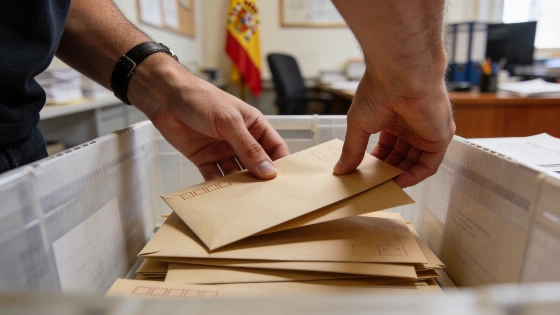
Provincial delegations of the Oficina del Censo Electoral send papers to CERA registrants. For the 29N election, the first dispatches are scheduled from 24 to 30 October, with ballot papers to follow in November.