The Spanish government considered asking King Felipe VI to contact Morocco's monarch over the Ceuta migration crisis. The call has not taken place. Tensions remain as Madrid seeks to avoid escalation with Rabat.
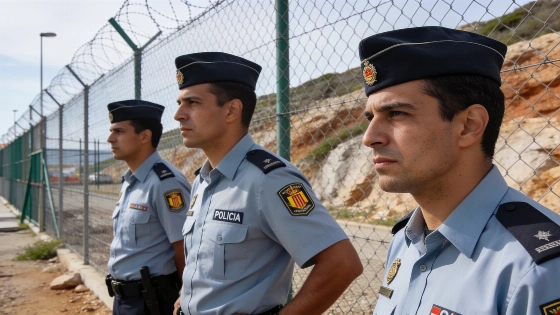
The Spanish government has explored the possibility of King Felipe VI reaching out to Morocco's King Mohamed VI to address the ongoing migration crisis in Ceuta, according to sources from both the executive and the Royal Household cited by EL PAÍS. Despite internal discussions, the call has not yet occurred, as both sides monitor the evolving situation following the mass entry of migrants into Ceuta at the end of July.
Within the Royal Household, officials are waiting to see how events develop before considering any direct intervention. The option of a royal visit to Ceuta or a call to Mohamed VI remains open, but only if deemed useful and at the request of Prime Minister Pedro Sánchez—a step that has not been formally taken. Felipe VI has been closely following the crisis, holding meetings and phone conversations with key political figures, including Ceuta's president Juan Jesús Vivas, Melilla's president Juan José Imbroda, and opposition leader Alberto Núñez Feijóo. However, direct contact with Morocco's monarch has not materialized.
While Sánchez has not personally requested the king's involvement, a cabinet minister did suggest to the Royal Household that a proactive call to Mohamed VI could help ease tensions and express gratitude for Morocco's role in returning migrants after the July 30 incident. The government has so far avoided direct confrontation with Rabat, instead attributing the crisis to social media-driven 'pull factors' and unidentified criminal networks. The opposition, led by the PP, initially criticized Madrid's handling of the crisis but has since toughened its stance toward Morocco, accusing it of using migration as leverage.
Ultimately, the Royal Household decided against immediate contact with Mohamed VI, concerned that such a move could be misinterpreted while the crisis remains unresolved. Unlike the close personal ties between former King Juan Carlos and Hassan II, the current monarchs maintain a more reserved relationship, according to diplomatic sources. The Spanish Royal Household notes that Mohamed VI once sought advice from the Spanish embassy in Rabat regarding a Spanish teacher for his son, but overall, the dynamic is described as different rather than strained.
There is no ruling out a future call or visit by Felipe VI to Ceuta, but any such step will depend on the government's assessment of its utility and timing. The government has already sent eight ministers to the region, and its spokesperson has been stationed in Ceuta for several days. Some reports suggested the Royal Household considered a brief visit by the king, similar to Sánchez's trip on July 31, but this has been denied by palace officials.
Since the crisis began, Sánchez has coordinated with his ministers from his summer residence in Lanzarote but has not returned to Ceuta. Ceuta's president, Juan Jesús Vivas, stated after meeting Felipe VI in Palma that the king is committed to visiting the city, though no date has been set and any trip will be organized in line with government planning.
The sensitivity of a royal visit to Ceuta is well understood in Madrid, given Morocco's longstanding claims over the city. The only previous visit by a Spanish head of state in recent history was by Juan Carlos I in 2007, which lasted just five hours but was seen as a historic gesture. That visit prompted protests from Moroccan authorities, who view Ceuta as disputed territory. During his stay, Juan Carlos I avoided any direct mention of Morocco, instead emphasizing his commitment to all Spaniards.
For additional context on the political tensions and calls for stronger border measures in Ceuta, see this related report on how local PSOE deputies have demanded a state of alarm and Frontex deployment: Ceuta socialists urge Madrid to act on border emergency.
Ceuta and Melilla, Spain's two autonomous cities on the North African coast, have long been focal points for migration and diplomatic friction with Morocco. The Spanish government typically seeks to balance border security with maintaining stable relations with Rabat, as both countries cooperate on migration control, trade, and counterterrorism. Any high-profile gesture, such as a royal visit or direct communication between monarchs, is weighed carefully for its potential impact on bilateral ties and domestic politics. The current situation underscores the delicate interplay between Spain's constitutional monarchy, executive authority, and foreign policy priorities in managing sensitive border issues.