Spanish women are openly discussing the impact of menopause. Many report severe symptoms affecting work and family life. Medical experts highlight the lack of quality information and support.
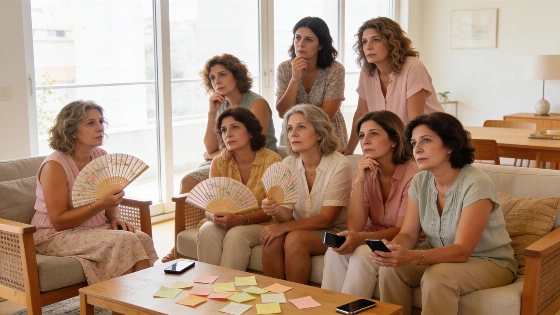
Across Spain, more women are breaking the silence around menopause, describing a stage marked by symptoms that disrupt daily routines and challenge emotional stability. Reports from those experiencing menopause reveal a pattern of mental fog, mood swings, and physical discomfort that many say caught them unprepared. The conversation is gaining momentum as women share their stories, often highlighting the lack of practical guidance and support.
Personal accounts collected from different regions show that symptoms such as insomnia, irritability, fatigue, and hot flashes are common. Some women, like Laura, describe struggling with memory lapses and unpredictable mood changes, while others, including Marta, point to the emotional toll and anxiety that can arise without clear cause. For many, these issues extend beyond the home, affecting relationships and performance at work.
Medical professionals are also seeing a rise in women seeking help for menopause-related problems. According to Silvia P. González, president of the Asociación Española para el Estudio de la Menopausia, a significant portion of patients report mental fog and decreased desire, with about a quarter experiencing symptoms severe enough to impact their quality of life. While a minority pass through menopause with few or no symptoms, the majority face challenges that require attention and, in some cases, medical intervention.
Social media has become a key platform for sharing experiences and advice, but it has also led to conflicting opinions and information. Influencers and online communities offer support, yet the abundance of advice can be overwhelming and sometimes unreliable. Experts warn that women must carefully evaluate the sources of information, as misinformation can add to confusion and anxiety.
Despite growing awareness, many women still feel that menopause is a neglected topic in both medical research and public discussion. Some express frustration over the limited treatment options and the perception that women's health issues receive less attention. Others note that cultural attitudes contribute to a sense of invisibility, although there are signs that this is beginning to change as more women speak out.
In Spain, menopause typically occurs between the ages of 45 and 55, affecting millions of women. The Spanish healthcare system offers various treatments, including hormone therapy and natural alternatives, but access and awareness remain uneven. Recent years have seen increased efforts by medical societies to provide accurate information and resources, yet many women still report feeling unprepared for the transition. The ongoing debate highlights the need for better education, more research, and greater societal recognition of menopause as a significant health issue.