Justice Minister Félix Bolaños demands urgent action from the Supreme Court on the CERA suspension. The dispute could affect voting rights for 400000 Spaniards abroad. Political accusations intensify ahead of the 2027 elections.
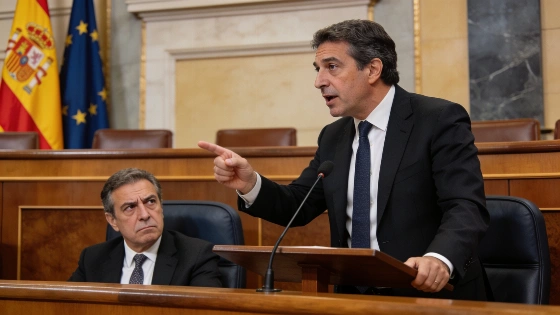
Tempers flared in the Senate as Justice Minister Félix Bolaños urged the Supreme Court to quickly resolve the freeze on new registrations in the Censo Electoral de Residentes Ausentes (CERA). Nearly 400,000 Spaniards living abroad—many eligible through the so-called law of grandchildren—could lose their right to vote.
The debate sharpened when Alfonso Serrano, a senior senator from Madrid and member of the Partido Popular (PP), warned Bolaños that government officials could face legal action. Serrano accused the government of using nationality policy for electoral gain, pointing to a surge in Spanish nationality applications in Cuba: from 500 exiles to 300,000 requests. He argued that a 2022 instruction presumed exile status for all Spaniards who left between 1936 and 1955, which he said went beyond the law’s intent and created rights not approved by Parliament.
On September 10, 2026, the Supreme Court of Spain temporarily suspended new CERA registrations and the electoral effects of existing entries for certain naturalized citizens under the Law of Democratic Memory, citing a serious risk to electoral transparency due to the exceptional increase in the external electorate.
Bolaños responded by pointing out that similar policies had been enacted by previous governments, including under Mariano Rajoy’s PP administration, to help descendants of Spaniards gain nationality. He also noted that the PP had previously granted citizenship to descendants of Jews expelled in the 15th century. Bolaños accused the PP of spreading misinformation and supporting a measure that would strip hundreds of thousands of Spanish citizens abroad of their voting rights, saying the law had not been controversial until Vox raised objections.
Serrano countered that the PP had raised concerns about irregularities for over a year, only to be dismissed by the government as spreading “fake news” or “trumpism.” He challenged the government to show the same willingness to amend the law for the 300,000 Basques who fled violence, if restoring rights is truly the goal.
With the 2027 elections approaching, the Supreme Court’s decision on the CERA suspension will determine whether these new voters remain on the rolls. The dispute echoes other international debates over voting rules, such as the recent US Supreme Court intervention on mail-in voting, as previously reported.
According to official statements and legal analyses, the Supreme Court's measure specifically affects those who obtained citizenship under DA 8 of Law 20/2022 and were registered in CERA, but allows exceptions for individuals who can document genuine political, ideological, religious, or sexual-orientation-based exile of their ancestors. The Central Electoral Commission (JEC) decided not to appeal the ruling and began implementing it, effectively confirming the temporary suspension of voting rights for the affected group. Estimates suggest that the total external electoral base could exceed 2.7 million people by the 2027 elections.
At the heart of the dispute is who defines the boundaries of Spanish democracy. The government’s push for a quick court decision reflects the urgency—and the risk—of leaving hundreds of thousands without a vote. The PP’s warnings and accusations of “electoral engineering” show a party determined not to let the Socialists control the debate. As the Supreme Court weighs its decision, the outcome will directly affect Spaniards abroad whose right to participate now depends on the courts and political maneuvering.