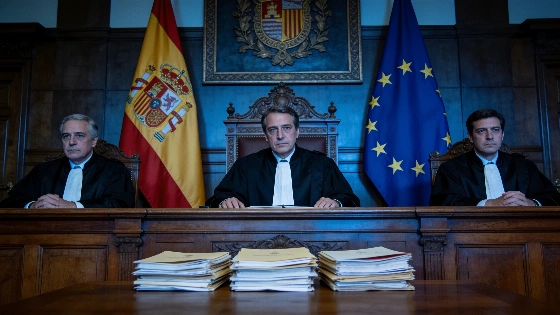
Spain’s Supreme Court has erased convictions for eight people linked to the Catalonia protests. The decision follows the EU court’s support for the amnesty law. This marks a turning point for those prosecuted after the 2019 verdict.
The Supreme Court has, for the first time, implemented Spain’s amnesty law by annulling the convictions of eight individuals sentenced for public disorder and disobedience in Girona. This move comes after the European Court of Justice upheld the legality of the amnesty, which was introduced by the government in collaboration with pro-independence parties. The eight had been found guilty following protests that erupted in response to the sentencing of Catalan leaders involved in the 2017 independence push.
The Penal Chamber’s decision follows months of legal uncertainty. Last October, the Constitutional Court dismissed a challenge to the amnesty law raised by the Supreme Court. However, the Supreme Court delayed applying the law, awaiting the European court’s position. With the EU court’s recent endorsement, the path was cleared for the Supreme Court to extend the amnesty to all those affected in this case.
The Girona convictions stemmed from demonstrations that took place after the high-profile verdict against the leaders of the so-called procés. The eight individuals were sentenced by the Audiencia de Girona for their roles in the unrest, which included charges of disobedience and public disorder. The Supreme Court’s ruling now erases these convictions, effectively closing the chapter for these defendants under the new legal framework.
This development is part of a broader legal and political debate over the scope and impact of the amnesty law. The measure, which has been both supported and contested across Spain’s political spectrum, was designed to address the fallout from the Catalan independence crisis. The Supreme Court’s action signals a significant shift in the judicial handling of cases linked to the 2017 events. For context, similar legal disputes have arisen in other cases, such as the ongoing challenge by Oriol Junqueras and former Catalan officials regarding the Tribunal de Cuentas, as detailed in this recent report on legal appeals tied to the amnesty law.
The amnesty law’s application is expected to influence numerous pending cases related to the Catalan conflict. Legal experts note that the Supreme Court’s decision may set a precedent for future rulings, potentially affecting dozens of individuals prosecuted for their involvement in the protests and political actions surrounding the independence movement. The situation remains dynamic, with further judicial and political responses anticipated as the implications of the amnesty continue to unfold.