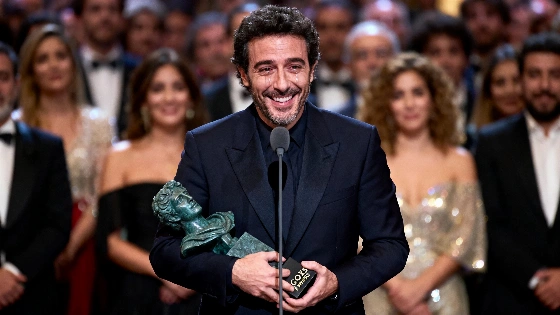
Susana Abaitua and Juan Dávila present 'El último mono' in Madrid. The film explores gender dynamics in the age of social media. Abaitua shares a candid story about balancing family and intimacy.
Susana Abaitua, recently nominated for the Goya Award for Best Leading Actress in 2026, has drawn attention not only for her role in 'El último mono' but also for her candid admission about managing privacy in her personal life. During a visit to La Revuelta in Madrid, where she appeared alongside Juan Dávila to promote the new film directed by Joaquín Mazón, Abaitua described the creative lengths she goes to for moments of intimacy with her partner while living at her mother's home. She admitted that, with her nephews and partner all under one roof, she sometimes resorts to spontaneous car trips, using the excuse of long lines at a local hamburger restaurant to explain her absence—an anecdote she revealed her mother was only now discovering.
'El último mono', produced with the participation of RTVE, delves into the complexities of relationships between men and women in the digital era. The plot centers on Alejandro, a self-styled seduction guru, who bets he can win over Mariela, a feminist comedian and writer known for her sharp humor at the expense of men. Juan Dávila, who plays Alejandro, highlighted the dangers of such 'gurus', noting that their followers often include incels and those with misogynistic attitudes.
The film's production also demanded a high level of commitment from its cast. Dávila, previously recognized as Spain's most successful stand-up comedian before transitioning to acting, filmed several scenes completely nude. He chose to forgo the use of a skin-colored thong, seeking greater authenticity in his performance. After consulting with his co-star, he decided to appear without any covering, even in scenes requiring close interaction with Abaitua. She praised his courage and professionalism, emphasizing the trust and respect maintained on set.
Yunez Chaib, resident comedian at La Revuelta, also features in the film, participating in a memorable scene involving Dávila. The dynamic between the cast members was further shaped by Dávila's energetic and talkative nature, which Abaitua admitted sometimes led her to mentally tune out during their interactions. Their professional relationship dates back to 2013, when they both appeared in the stage production 'Mucho ruido y pocas nueces'. In 'El último mono', Dávila continues to build his acting career, with some noting his resemblance to Matt Damon.
While the film's themes touch on gender, power, and the influence of social media, its release comes at a time when Spanish cinema is increasingly engaging with contemporary social issues. This trend is reflected in other recent works, such as a documentary examining generational memory gaps around the Miguel Ángel Blanco case. The willingness of actors like Abaitua and Dávila to address both personal and societal topics in public forums signals a broader openness in Spain's cultural landscape. 'El último mono' is positioned not only as entertainment but as a conversation starter about the realities of modern relationships and the pressures of digital life.
For context, the Goya Awards are Spain's most prestigious film honors, often seen as a barometer for the industry's direction. RTVE, the national broadcaster, continues to play a significant role in supporting Spanish cinema. The growing intersection of comedy, activism, and film in Spain reflects shifting audience expectations and a demand for stories that resonate with everyday experiences. As Spanish filmmakers and actors increasingly draw from real life, the boundaries between personal narrative and public discourse continue to blur, offering audiences new ways to engage with the country's evolving social fabric.