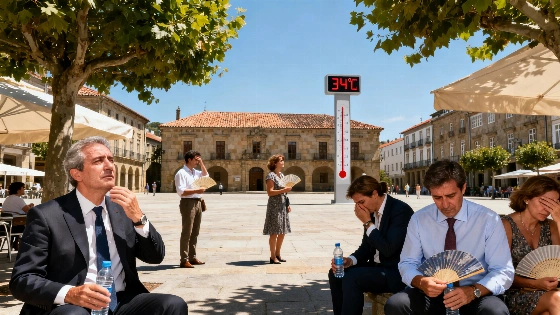
Heat and Storm Warnings Issued Across Inland Spain. Yellow alerts have been issued in several Spanish regions due to high temperatures. Galicia and Cantabria are expected to see temperatures above 34°C, while the Ebro Valley may reach 36°C. In the Guadiana Valley, temperatures could climb to 38°C.
The interior regions of Galicia, Cantabria, and the Ebro Valley have come under the focus of Spanish meteorologists: a sharp rise in temperatures is expected over the coming days. According to forecasts, thermometers in these areas will exceed 34°C, and in the Ebro Valley, maximum values may reach 36°C or higher. Authorities have already issued a yellow weather alert due to the heat, indicating increased attention to possible health and infrastructure impacts.
Special attention is also being paid to the Guadiana Valley, where temperatures are forecast to reach up to 38°C. Although there are no official warnings yet, the heat will also noticeably affect residents of the Tagus and Guadalquivir valleys. Uncomfortable weather is also expected in these areas, though no formal restrictions have been introduced so far.
Meteorologists point out that such temperature spikes at the start of summer may lead to local thunderstorms and unstable weather conditions. Last year, similar circumstances already prompted the introduction of a yellow alert in other regions of the country, including the capital. For example, in Madrid, a yellow warning was also previously issued due to heat and the risk of thunderstorms, accompanied by restrictions and recommendations for the public.
For reference: the yellow weather alert level in Spain means that weather conditions can be potentially dangerous for certain groups of the population, especially the elderly, children, and people with chronic illnesses. Authorities recommend avoiding prolonged exposure to the sun, monitoring hydration levels, and, if possible, limiting physical activity during the hottest hours of the day. According to Spanish meteorological services, such periods of heat in June are becoming increasingly frequent, which is linked to the general warming of the climate on the Iberian Peninsula.