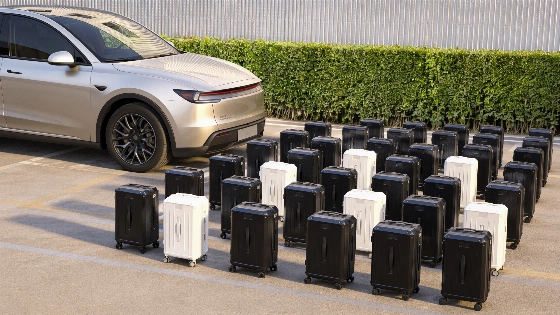
Tesla is set to launch the Model Y L in Spain, a seven-seat electric SUV designed for families. With a cargo capacity exceeding 2,000 liters, the new model can fit up to 25 cabin suitcases, redefining practicality for summer road trips.
With the Spanish launch of the Tesla Model Y L approaching, the electric carmaker has shifted its focus to a feature that resonates with families: space. In a recent social media campaign, Tesla showcased the Model Y L’s cavernous interior by packing it with an impressive 25 cabin suitcases and 20 carry-on bags, all fitting comfortably when the two rear rows are folded flat. The demonstration comes just as many Spaniards prepare for their summer holidays, highlighting a practical solution to the perennial problem of fitting luggage for the whole family.
The Model Y L is Tesla’s answer to the growing demand for larger, more versatile SUVs in Europe. Unlike the original five-seat Model Y, this new version adds a third row, bringing total seating to seven. The extra row is fully foldable, allowing owners to switch between passenger and cargo configurations as needed. According to Tesla, the Model Y L is engineered to deliver “maximum versatility for families,” a claim underscored by its 2,094-liter cargo volume—plus an additional 116 liters in the front trunk. The third row alone offers 381 liters, expanding to 894 liters when folded.
Despite its increased size, the Model Y L maintains the performance and range expected from the brand. The SUV boasts a WLTP-rated range of 600 kilometers, making it suitable for long-distance travel without frequent charging stops. Pricing for the Spanish market starts at €55,490, positioning it €15,000 above the standard Model Y but offering significantly more space and flexibility.
Designed for Real-World Needs
For many families, the true test of a car’s practicality is how much it can carry. Tesla’s video demonstration leaves little doubt: the Model Y L can handle the demands of a full summer getaway, accommodating both large suitcases and smaller bags with ease. The ability to fold down both rear rows transforms the SUV into a cargo hauler, while still retaining the comfort and technology that define the Tesla experience.
This focus on utility sets the Model Y L apart from many competitors, which often prioritize sporty styling or performance over everyday usability. As the electric SUV segment grows, brands are increasingly challenged to balance innovation with the realities of family life. Tesla’s approach with the Model Y L is a clear signal that practicality and electric mobility can go hand in hand.
Context and Market Impact
The Model Y L is not Tesla’s first foray into spacious electric vehicles. The company’s lineup includes the larger Model X and the distinctive Cybertruck, though neither is currently available in the Spanish market. By tailoring the Model Y L specifically for European needs, Tesla aims to capture a segment that values both space and sustainability. The move comes as other automakers, such as Porsche with its race-inspired 911 GT3 S/C convertible, continue to push boundaries in their own niches, highlighting the diversity and rapid evolution of the automotive landscape.
As summer travel ramps up, the Model Y L’s arrival could reshape expectations for what an electric family car can offer. Its combination of range, capacity, and adaptability positions it as a strong contender for those seeking a single vehicle that can handle both daily routines and extended road trips. For Spanish drivers, the Model Y L may soon become a familiar sight on highways and at holiday destinations, setting a new benchmark for electric SUVs in the region.
Industry analysts note that the Model Y L’s launch reflects a broader trend: European consumers are increasingly prioritizing practicality and efficiency in their vehicle choices, especially as electric options become more mainstream. With its focus on real-world usability, Tesla’s latest model could influence how other manufacturers approach the family SUV segment in the years ahead.