Ken Russell’s The Devils returns in a director-approved 4K restoration. The missing crucifix sequence and censored ending will screen in the United States on 16 October 2026, followed by UK and Ireland cinemas on 30 October.
Warner Bros. Clockwork has scheduled a limited United States engagement for Friday 16 October 2026. Independent coverage places the restored version’s BFI London Film Festival premiere on 9 October, with its commercial UK and Ireland release set for 30 October. The film brings back a work that turned religious persecution and political power into one of cinema’s most confrontational spectacles.
The recovered material lasts less than a minute. It shows nuns in a frenzy pulling down a huge crucifix and sexually desecrating the sculpted figure of Jesus. The British Board of Film Classification cut the scene even though The Devils opened in the United Kingdom and the United States with an X rating.
The American restoration release is being handled by Warner Bros. Clockwork as a one-week limited engagement and carries an NC-17 rating.
British censorship was only part of the damage. In the United States, the MPAA removed more material, including the ending in which Juana de los Ángeles receives part of Urbain Grandier’s charred femur after his torture and execution. She then uses it to masturbate. The restored version returns that ending and the sequence commonly known as the Rape of Christ.
The restoration took 22 years to complete.
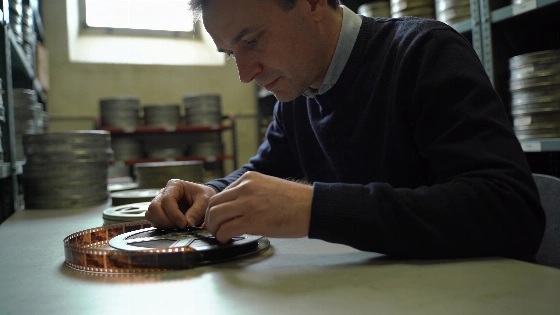
Its breakthrough came through journalist Mark Kermode. In 1995, he interviewed Russell for Sight and Sound and heard about the missing crucifix sequence. Russell believed the footage had probably been destroyed. Kermode kept contacting film libraries and archives, then approached Warner Bros. He eventually located a can marked “C Cut 89” in a distributor warehouse. The film inside had begun to decompose and released an unpleasant smell when the container was opened. The missing sequence was there.
The restored version premiered at the BFI London Film Festival on 9 October 2026, followed by a commercial cinema release in the United Kingdom and Ireland on 30 October. The film's history of censorship extended beyond Britain: conservative groups and the Vatican protested after its premiere, while several countries banned it or released heavily shortened versions.
The label made sense because the BBFC had officially removed 89 seconds from The Devils, including that scene and other cuts. The footage matched Russell’s description. It was not a later addition or a sensational reconstruction. It was the material the director had filmed.
Warner did not immediately embrace the recovery. Tim Everett from the studio’s British operation spent a year asking the storage department for can after can before arranging a safe video transfer. Colleagues at Warner’s headquarters in Burbank were unhappy that he had pursued the project. A change of executives and the creation of the Warner Clockwork label eventually opened a route for the archive title’s relaunch.
Russell supervised a reconstructed edit in 2004 with editor Michael Bradsell. He died in 2011 before seeing the complete restoration reach cinemas. The current 4K version is based on that Russell-approved reconstruction, rather than on a new assembly made only from descriptions of the missing footage. According to The Hollywood Reporter, the release represents the closest available version to the edit the director authorised.
The version now shown has passed through Cannes and Sitges. A new generation of filmmakers, including Guillermo del Toro, has defended its importance. Contemporary festival coverage stresses the film’s examination of religious politics and state pressure. It also focuses on mass manipulation and collective hysteria as instruments of power.
The film’s cultural afterlife belongs to the same wider pattern of renewed attention given to preserved works, including a recent museum reopening built around restored material and historical memory. In The Devils, the archive itself carries the argument: every missing second had been removed from a story about who controls images and belief.
Russell drew on Aldous Huxley’s 1952 novel The Devils of Loudun and John Whiting’s 1960 play The Devils. Both revisited the real events of 1634 in Loudun, where the priest Urbain Grandier was accused of witchcraft and of bewitching the Ursuline nuns led by the superior Juana de los Ángeles. Grandier was tortured and burned at the stake in the most famous case of collective demonic possession.
The political machinery behind the accusations gives the restored film its sharpest edge. Loudun existed as a fortified city-state with the permission of Louis XIII, while Cardinal Richelieu wanted to centralise power and demolish its fortress. Grandier opposed that plan publicly. His sexual reputation and his rejection of the convent’s spiritual direction made him easier to destroy, but the film’s target is larger than one corrupt priest or one obsessed superior.
Oliver Reed plays Grandier with charisma. Vanessa Redgrave’s Juana de los Ángeles turns physical deformity and sexual obsession into a disturbing portrait of a woman trapped inside an institution. Ken Russell filmed the material in his script. Restoring the cuts makes the film’s central claim harder to obscure. The demons are human power, and the most important subject is the impious alliance between Church and state that turns religion into a political weapon.