Abelardo de la Espriella Takes the Lead in Final Polls Ahead of Colombian Elections. Two independent polls have recorded Abelardo de la Espriella leading ahead of the second round of elections in Colombia. The margin over Iván Cepeda remains narrow. The results may influence the political balance in the country.
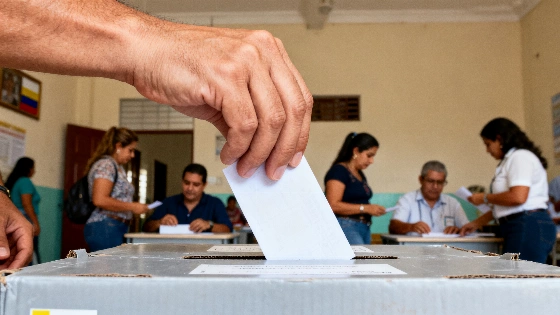
In Colombia, the last polls before the election silence have been published, determining the balance of power on the eve of the presidential runoff. According to the latest data, Abelardo de la Espriella leads the race for the first time during the campaign, narrowly outpacing Iván Cepeda. A survey conducted by the Consejo Nacional de Consultoría commissioned by Cambio magazine shows De la Espriella at 48.6% support and Cepeda at 44.7%. The difference is 3.9 points—slightly above the statistical margin of error.
At the same time, the Guarumo company, hired by El Tiempo, polled 2,073 adults in 54 municipalities across the country. Here, De la Espriella's lead is even more pronounced: 52.6% versus 45% for Cepeda, with 3.4% of votes cast for the 'blank' option.
Both studies were published on the last day allowed by law before the start of the week when new data releases are prohibited. According to Cambio magazine, 2,186 people participated in the Consejo Nacional de Consultoría poll. The results of both surveys indicate that the race between the candidates remains tight, and the final outcome may depend on voter turnout and the decisions of those still undecided.
Interest in the Colombian elections has risen sharply in Spain in recent years, where there is a significant Colombian diaspora. Issues of political stability and migration are regularly discussed in the Spanish media, as seen, for example, in coverage of the expansion of the Plus Ultra investigation, which involved a former Prime Minister of Spain— details were provided in a separate publication.
For reference: the second round of presidential elections in Colombia is held if no candidate receives an absolute majority in the first round. In 2026, the country once again finds itself in a situation where the outcome of the vote is determined by the final days of the campaign and undecided voters. According to official statistics, turnout in the previous election was around 54%, and voting for candidates from the right and left traditionally ends with a narrow margin. The results of the second round will be significant not only for Colombia's domestic politics but also for its relations with key countries in Europe and Latin America.