Arturo Rafael Jerónimo Valiente crafts specialized adobe bricks to help protect Chan Chan, the largest mud-brick city on the planet. His expertise, rooted in childhood experience, now supports the ongoing fight to preserve this UNESCO World Heritage site against climate, urban pressure, and vandalism.
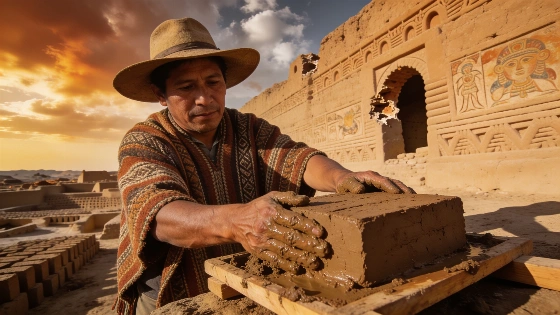
Arturo Rafael Jerónimo Valiente spends his days shaping earth into the very bricks that keep Chan Chan standing. Decades ago, he learned the craft in a small artisanal brickyard, never imagining that his hands would one day help safeguard the largest adobe city on the planet—a city whose survival depends on knowledge passed down through generations.
Chan Chan, once the capital of the Chimú kingdom, sprawls across nearly 20 square kilometers on Peru’s northern coast. Its monumental core, with ten walled compounds, ancient roads, and ceremonial spaces, has faced centuries of erosion, encroachment, and neglect. Since being named a UNESCO World Heritage site in 1986, the city’s fragile mud architecture has required constant attention, especially as climate events and human threats intensify.
From Childhood Labor to Heritage Protection
Arturo’s journey began in childhood, molding bricks from local soil and water. Over time, he learned to read the land—identifying the right mix of earth, sand, and small stones to create sturdy, weather-resistant blocks. This practical expertise, once a means of survival, became a rare asset when, fifteen years ago, a friend told him that Chan Chan needed skilled adoberos for a new conservation project.
He joined the so-called Laberinto project and has remained ever since, working alongside archaeologists and conservationists. “What amazes me most about Chan Chan is how our ancestors built such a vast city from mud,” he says. Even after years on the job, the scale and ingenuity of the site continue to inspire him.
Crafting Bricks for a Living Monument
Preserving Chan Chan demands more than traditional brickmaking. The adobe pieces Arturo produces are tailored to the site’s unique needs. The recipe—earth, sand, and confitillo (small gravel)—is carefully balanced to match the original materials and withstand the region’s harsh conditions. Each brick is shaped and dried with precision, destined not to replace ancient walls wholesale, but to reinforce vulnerable sections, cap exposed surfaces, and build protective barriers where erosion threatens.
Every intervention is guided by specialists, who decide where new bricks can best support the ancient structures. Research into mortars and plasters continues, aiming to refine the materials and techniques that will give Chan Chan the best chance of survival. The work is painstaking: rain can crack walls and undermine foundations, while salt, wind, groundwater, and temperature swings all accelerate decay.
Endangered by Nature and People
Chan Chan’s challenges go beyond the weather. The city’s mud walls are especially vulnerable to El Niño events, which bring heavy rains and flooding. But human threats are just as pressing. Illegal settlements and urban sprawl have encroached on the archaeological zone for years, complicating conservation efforts. In May 2025, Peru’s Ministry of Culture condemned graffiti sprayed on original walls. The following month, authorities dismantled unauthorized structures covering 10,000 square meters in the Los Huachaques sector.
Despite these pressures, the work of adoberos like Arturo remains essential. Each brick he shapes is a small act of resistance against time, weather, and neglect—a way to keep the memory of the Chimú civilization alive in the face of mounting risks.
Why Chan Chan Matters
Chan Chan is not only a testament to ancient engineering but also a living reminder of how traditional skills can become vital tools for heritage preservation. According to data from Talent24h, the city’s ongoing survival depends on a delicate balance of scientific research, community involvement, and the hands-on expertise of people like Arturo. As climate change and urbanization continue to threaten sites like Chan Chan, the value of such specialized knowledge is only set to grow.