Leaving home for several days can mean returning to an unpleasant kitchen odor. A quick trick with a glass and paper helps preserve the water barrier in your sink, reducing the risk of foul smells from the pipes. Here’s how it works and what else you should check before locking up.
Returning from a holiday to find your kitchen filled with a sour, musty smell is an unwelcome surprise for many homeowners. The culprit is often not leftover food or poor cleaning, but the slow evaporation of water in the sink’s trap, which normally blocks sewer gases from entering your home.
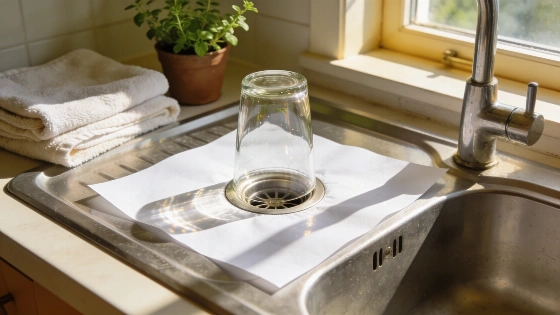
One practical solution has gained popularity for its simplicity: before leaving, place a sheet of paper over the drain opening and cover it with an upside-down glass. This setup helps slow down the evaporation of water in the trap by limiting airflow, preserving the barrier that keeps unpleasant odors at bay.
Why the Water Trap Matters
The curved section of pipe beneath your sink, known as the trap, holds a small amount of water that acts as a seal against gases from the sewage system. When a sink goes unused for several days—especially in summer or in homes with constant ventilation—this water can evaporate, breaking the seal and allowing odors to seep into the kitchen.
The paper and glass method works by creating a partial barrier over the drain. The paper molds to the drain’s surface, while the glass reduces air exchange, helping to keep the water in place for longer. While this is not a perfect airtight solution, it can be effective for short absences, provided the trap is full and the plumbing is in good condition.
Preparing Drains Before You Leave
To minimize the risk of returning to bad smells, let water run for a few seconds in all sinks, showers, and rarely used drains before you leave. This ensures each trap is filled and ready to block gases. Remove any food debris from the kitchen sink and clean the drain filter, as organic matter left behind can decompose and create its own odors, independent of the plumbing system.
Toilets also rely on a water barrier in the bowl. Never empty this reservoir, as it serves the same purpose as a sink trap and prevents sewer gases from entering your home.
When Odors Signal a Bigger Problem
If unpleasant smells return soon after using the sink, or persist even when the trap is full, this could indicate a deeper issue—such as a blockage, leak, poor ventilation, or faulty pipe connection. In these cases, covering the drain only masks the symptom. A professional plumber can identify the source and recommend whether cleaning, repair, or replacement is needed.
Extra Tips for a Fresh Home
Simple household tricks can make a real difference in comfort, especially during the hotter months. For those struggling with summer heat, methods like cooling your sheets or wrists can also help, as described in this guide to staying cool at night without air conditioning.
Taking a few minutes to prepare your drains before leaving can spare you from unpleasant surprises and help maintain a fresher, more welcoming home on your return.