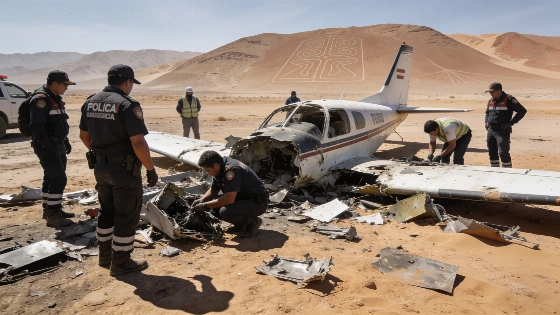
A sightseeing plane crashed near the Nazca Lines, killing all 13 on board. The victims include foreign tourists and a guide. Authorities are investigating the cause as the region faces renewed scrutiny over flight safety.
A tourist flight over the iconic Nazca Lines in southern Peru ended in disaster on Saturday, when a small aircraft operated by Aerodiana crashed near the María Reiche airfield. All 13 people on board, including the pilot, a tour guide, and 11 foreign tourists, lost their lives in the accident. The identities and nationalities of the passengers have not yet been released by authorities.
The crash occurred around 1 p.m. local time in the Pueblo Viejo area, just a short distance from the airstrip that serves as the main gateway for flights over the UNESCO World Heritage geoglyphs. The aircraft had departed from Pisco, aiming to give passengers an aerial view of the famous desert figures such as the hummingbird, monkey, spider, and condor, which attract thousands of visitors to the region each year.
Local officials confirmed the aircraft belonged to Aerodiana and stated that emergency protocols were activated immediately after the alert. The Provincial Municipality of Nasca coordinated with local authorities to support rescue and recovery operations. Technical teams from the Directorate General of Civil Aeronautics have begun collecting evidence to determine the cause of the crash and assess any potential liabilities.
The tragedy comes just one day after severe weather forced the suspension of tourist flights in the area. On Friday, strong Paracas winds swept through the Ica region, with gusts exceeding 40 kilometers per hour, drastically reducing visibility. The adverse conditions led to the diversion of two tourist planes to Marcona airfield and prompted operators to halt flights until Saturday. In Pisco, wind speeds reached 48 kilometers per hour, causing damage to school infrastructure, temporary street closures, and fallen trees along the Panamericana Sur highway.
This latest incident has reignited debate over the safety of tourist flights above the Nazca Lines, a sector that has seen several fatal accidents in recent years. In 2022, a plane from Aero Santos crashed shortly after takeoff near the same airfield, resulting in seven deaths, including both crew and international tourists. Another crash in 2010 involving AriNasca claimed six lives. The region is now observing a day of mourning as rescue teams continue recovery efforts and aviation experts work to clarify the circumstances behind the latest tragedy.
Flight safety in Peru's tourist regions remains a pressing concern, especially given the economic importance of aerial tours for local communities. The Nazca Lines, recognized globally for their archaeological significance, draw visitors from around the world, making reliable air transport essential for the area’s tourism industry. As investigations proceed, the focus is on technical assessments and regulatory oversight to prevent further incidents. The challenges of ensuring safety in adverse weather conditions are not unique to Peru; similar issues have affected other regions, as seen when emergency teams in Almería conducted extensive searches after a deadly wildfire, detailed in this report on post-disaster response in Spain. The outcome of the current investigation will likely influence future regulations for tourist flights over the Nazca Lines and other sensitive sites.