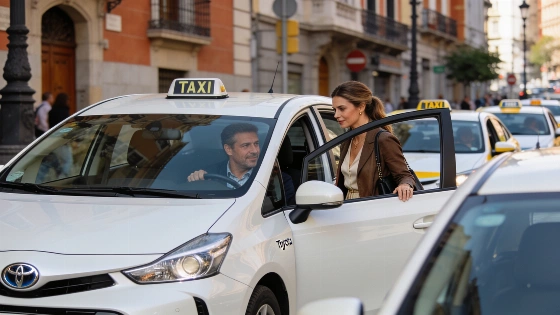
Toyota now accounts for nearly two-thirds of new taxis in Spain, driven by demand for self-charging hybrids and a growing share of electric models. The shift comes as overall taxi registrations decline and city rules push for cleaner fleets.
In the first seven months of the year, 3,834 new taxis were registered in Spain—a 6.8% drop compared to the previous year, according to data from the Instituto de Estudios de Automoción cited by elespanol motor. This decline reflects the aftershocks of pandemic-era fleet renewals, but beneath the surface, a more significant transformation is underway: the rapid electrification of Spain’s taxi sector, with Toyota at the forefront.
Toyota’s dominance is striking. Nearly two out of every three taxis registered in Spain during this period bore the Japanese brand’s badge, thanks largely to its self-charging hybrid (HEV) technology. These hybrids remain the top choice for Spanish taxi operators, prized for their reliability and the ability to access city centers under tightening environmental rules.
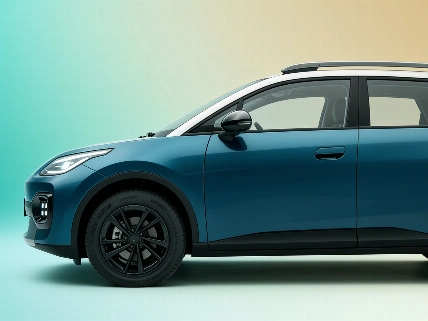
But Toyota’s ambitions now extend beyond hybrids. Last year, the company began rolling out fully electric models, and the response from taxi fleets has been notable. Between January and July, Toyota registered 2,477 taxis—a 13.6% year-on-year decrease, but with a crucial shift: almost 90% were hybrids, while 10.1% were fully electric, a much higher share than Toyota’s electric sales in the private car market. The bZ4X is currently Toyota’s sole electric taxi offering, while private buyers can also choose the C-HR+.
Other brands are feeling the pressure. Dacia, part of the Renault Group, ranked second with 264 taxis registered—a sharp 42.2% drop. Like Toyota, Dacia’s success is built on hybrids, which made up 81% of its taxi sales, but it also stands out as the only brand offering LPG (liquefied petroleum gas) taxis, accounting for 17% of its registrations. These LPG models, like hybrids, benefit from Spain’s ECO label, granting access to restricted urban zones.
Skoda, owned by Volkswagen Group, completed the top three with 243 taxis registered. Uniquely, more than half of Skoda’s taxi sales were fully electric, highlighting a growing appetite for zero-emission vehicles among Spanish taxi operators. Only Tesla sold more electric taxis, with 145 units registered in the same period.
Hybrid Preference, Electric Momentum
Self-charging hybrids remain the backbone of Spain’s taxi fleets, accounting for nearly 60% of new registrations so far this year. However, electric taxis are gaining ground, now representing 18.2% of the market—double their share in the private car sector. Diesel taxis, once dominant, have dwindled to just 3.2% of new registrations, squeezed by municipal restrictions on polluting vehicles.
Plug-in hybrids (PHEV) and other electrified models now make up over one in five new taxis, with the overall share of electrified vehicles in the taxi sector reaching 22.1%. This contrasts with the broader Spanish car market, where combustion engines still hold a 27% share, compared to just 3.6% among taxis.
Chinese Brands Enter the Scene
Chinese automakers are also making inroads, though their presence remains modest. Seven Chinese brands—including Bestune, BYD, Changan, Ebro, Geely, Jaecoo, Omoda, and XPeng—collectively registered 79 taxis between January and July, capturing 2% of the market. XPeng led the pack with 37 electric taxis. While this is far below their 15% share in the general Spanish car market, it signals growing competition in the electrified taxi space.
As the shift to cleaner taxis accelerates, the Spanish market is seeing a clear divide: private buyers still lean toward plug-in hybrids, while taxi operators increasingly opt for fully electric models. This trend is reinforced by city policies that favor low-emission vehicles for urban access.
For those interested in how hybrid technology is shaping Spain’s roads beyond the taxi sector, a recent review of the Mitsubishi ASX 180 HEV explores the real-world appeal of eco-labeled SUVs in Spanish conditions: see the full analysis here.
Looking ahead, the evolution of Spain’s taxi fleets offers a glimpse into the country’s broader mobility transition. As hybrids and electrics become the new standard, manufacturers and city authorities alike are recalibrating strategies to meet both environmental targets and the practical needs of drivers. The coming years will reveal whether Toyota’s lead can withstand the growing challenge from rivals—and whether Spanish cities can deliver on their promise of cleaner, quieter streets.