Josep Lluís Trapero has resigned as director of the Catalan police after a standoff with Interior councillor Núria Parlon. The move follows internal disputes and a controversial infiltration case involving Mossos agents.
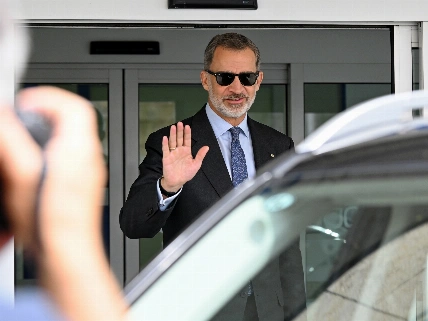
Josep Lluís Trapero’s resignation as director general of the Catalan police closes a turbulent chapter for the Mossos d'Esquadra. His departure followed a growing conflict with Interior councillor Núria Parlon over police leadership and priorities. Trapero informed Parlon of his decision at the end of August 2026. The announcement was coordinated with broader leadership changes and made public on September 9, 2026.
The immediate cause was Parlon’s order to remove senior officers after two Mossos agents infiltrated a teachers’ assembly. Trapero refused, unwilling to dismiss his team for political reasons. Both then-chief commissioner Miquel Esquius and the head of Information, Carles Hernàndez, offered to resign, but Trapero defended their actions, describing the intelligence-gathering as routine, though poorly executed. The political backlash was swift.
Trapero’s direct style and loyalty to his officers, coupled with his resistance to outside interference, ultimately left him isolated. People close to him describe a leader worn down by political infighting and frustrated by the lack of a shared direction with Parlon. He has not commented publicly and is not expected to. Parlon called the resignation a personal choice, but the breakdown in their working relationship was clear.
The appointment of Sílvia Catà as the new chief of the Mossos marked the final turning point. Trapero, once seen as a symbol of Mossos independence during the 2017 referendum, found himself increasingly on the margins. His shift from independence icon to “botifler” for some supporters was sealed when he took the director role under the PSC, trading his uniform for a suit but not his approach.
Within the force, Trapero was known for tight control and a small circle of trusted colleagues. His bluntness often clashed with Parlon’s approach. Interior sources say even routine meetings became tense, with Parlon reportedly struggling with Trapero’s direct manner. Critics of Parlon say she brought energy but little experience to the security role and rarely took his advice.
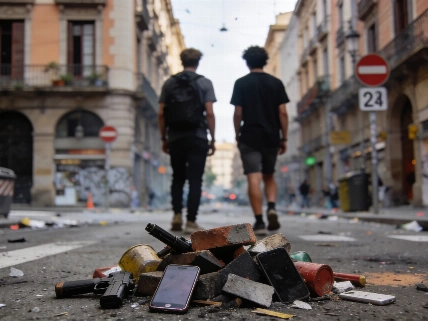
From the start, few expected the Parlon-Trapero partnership to last. Police and political insiders alike predicted a short alliance. Trapero once dismissed these doubts in parliament, but tensions soon surfaced. In one incident, a Mossos anti-riot officer was reportedly injured by a protester. The object was later found to be a fishing rod, not a baton. The episode forced Parlon to make a public apology, which Trapero’s camp saw as unnecessary.
Disagreements became routine, from resource allocation to handling court-ordered evictions. Trapero’s insistence on following police procedure often clashed with the Interior department’s political concerns. Their lack of rapport was obvious at public events: when Trapero spoke, Parlon would check her phone, and vice versa.
The infiltration scandal was the breaking point. Both faced parliamentary censure, and the opposition used the moment to highlight the dysfunction. Later, Parlon pressured Trapero to speak to the media about a sensitive murder case under judicial secrecy, deepening the rift. Trapero’s supporters say public comment during ongoing investigations is inappropriate; critics argue he should have been more visible.
As Esquius prepared to retire, Parlon insisted on appointing a woman as his successor and chose Catà. The leadership reshuffle also included Esquius’s retirement due to age, with Catà taking over his position, information from EFE. The changes reflected broader generational and structural shifts within the Mossos d'Esquadra. Left out of the decision, Trapero saw no way forward and resigned. He now returns to the Mossos as major, leading the General Inspectorate and Evaluation unit. Ferran López, who led the force during the Article 155 intervention, takes over as director.
Parlon publicly praised Trapero’s service, but people familiar with their dynamic say both sides felt relief. Back in uniform, Trapero leaves behind a department where the line between operational independence and political oversight remains blurred. The episode echoes similar leadership struggles in other Spanish institutions, as seen in other recent cases where internal conflict erodes public trust.
In Catalonia, the boundary between police work and politics remains in flux. The Mossos d'Esquadra now face a new phase under leadership chosen for political alignment rather than consensus within the force. For a police body already under scrutiny, loyalty to the institution could give way to party interests. Trapero’s refusal to yield to political pressure cost him his post, but preserved his reputation among those who believe the police should answer to the law rather than changing political agendas.