Donald Trump dismisses calls for stricter AI controls and mocks expert concerns. His stance contrasts sharply with China’s push for regulation. The debate exposes deep divisions over who should shape the future of artificial intelligence.
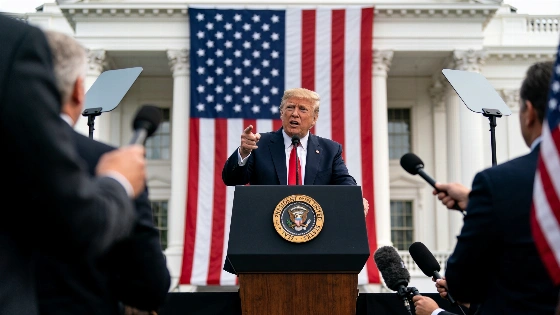
Donald Trump has openly dismissed proposals for new controls on artificial intelligence, brushing off warnings from tech experts and international organizations. Rather than backing regulation, the US president claims that only a "strong and intelligent" leader is needed to keep AI in check—a message he posted in all-caps on his own social network.
China, meanwhile, has called for a "security barrier" to manage AI development. Trump rejects any talk of limits, calling it a "sick conspiracy." He frames the race for AI dominance as a winner-takes-all contest, insisting that whoever leads will control the future. "We are ahead of China and everyone else, and we will stay ahead," he wrote, targeting what he calls "conspirators, traitors and leakers." According to Reuters, on September 14, 2026, Trump said the US already has "tremendous criminal and regulatory power" over AI companies and described himself as the main safeguard against potential risks.
On September 12, 2026, Anthropic CEO Dario Amodei published an essay urging an immediate slowdown in the development of advanced AI models, a call that was soon publicly supported by both Sam Altman and Elon Musk.
Comedian Jimmy Fallon picked up on Trump’s statements during The Tonight Show, poking fun at the president’s self-confidence and habit of rebranding. Fallon joked that Trump would rename artificial intelligence as "inteligencia americana," riffing on his tendency to put his own label on everything from lakes to states. Fallon also quipped that Trump once confused "IA" with "American Idol," questioning the president’s grasp of technology.
Fallon’s monologue went further, asking whether Trump could even beat the online game Wordle, let alone handle AI. He also mocked Trump’s claim that concerns about AI are exaggerated by "very negative forces," and his supposed plan to create a new military branch called the "force against the very negative force."
At the same time, tech leaders including Elon Musk, Sam Altman, and the CEO of Anthropic have called for a slowdown in unchecked AI development. Musk admitted that slowing down is not his strength, but said caution is needed. Their warnings echo those from former employees at Anthropic and Google DeepMind, as well as the United Nations, all of whom argue that unregulated AI could pose serious risks. CNBC notes that this rare agreement among top AI competitors followed Amodei's essay and marked an unusual moment of unity in the industry.
Trump has repeatedly linked AI regulation to the US competition with China, warning that any slowdown or additional restrictions could jeopardize American leadership in the field. According to CNBC and Al Jazeera, he has dismissed calls for stricter oversight as attempts to weaken the US position, emphasizing that maintaining technological superiority is paramount.
The standoff between the US and China over AI regulation is about more than policy—it is a contest for global influence. China’s push for safeguards stands in sharp contrast to Trump’s combative rhetoric. The international community is watching, aware that decisions in Washington and Beijing will shape the future of artificial intelligence.
As the world debates who should set the rules for AI, Trump’s dismissive attitude has become a flashpoint. His refusal to engage with expert advice or international consensus signals a broader unwillingness to accept oversight—an approach that could leave the US isolated if global standards emerge. The spectacle of a president more interested in branding than substance is familiar, as seen in other high-profile moments such as those reported earlier. In the end, the future of AI governance may depend less on bravado and more on whether leaders are willing to listen to those who understand the stakes.