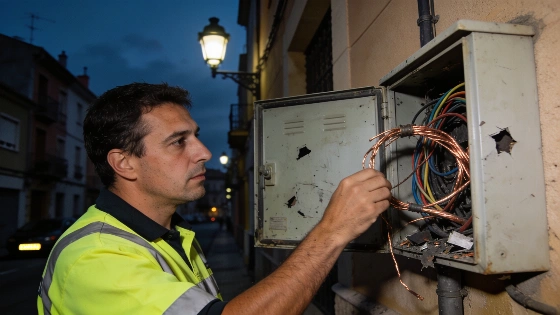
The theft of 3,400 meters of copper cable has badly disrupted street lighting in eastern Figueres, prompting the Guardia Urbana to arrest two suspects in recent days. The large-scale theft targeted lamp posts and underground cable ducts across nine areas, leaving residents facing weeks without lighting and the city council with a repair bill exceeding €48,000.
Local authorities said the incidents took place in neighborhoods near Marca de l’Ham, affecting streets such as Gorgs, Polígono Clos de Ferias, Vía Láctea, Cangrejo, Alemania, Francia, Paseo del Camino de Vilatenim, Caputxins, and the Llançà-Port road. The thieves reached electrical infrastructure by opening manholes and underground channels, causing outages and damaging cables and auxiliary equipment.
Police stepped up their efforts after repeated outages were reported. In two separate incidents, officers detained a 23-year-old Moroccan national, already known to police with five prior records. He was first caught carrying a sack filled with electrical cable and a knife. Days later, officers apprehended him again as he tampered with a public lighting manhole on Camí Vell de Vilatenim. In a separate case, a 33-year-old Moroccan man with 24 previous offenses was arrested after fleeing the municipal warehouse “Can Sagrera” with a 40-meter cable reel.
Municipal services have started the complex work of restoring lighting. Crews must remove damaged cables, install new wiring, replace connectors, and inspect electrical panels. City officials estimate full restoration of street lighting in the affected areas will take up to three weeks. Residents have faced impressive disruption: some streets remain unlit at night, and concerns about safety are growing.
Theft of public infrastructure is a growing concern in several Spanish cities. In a related case in Lleida, multiple arrests followed a confrontation between shopkeepers and suspected thieves, underscoring the challenges local authorities face in tackling property crime.
The disruption in Figueres also reflects broader risks to electrical infrastructure across the region. On 23 October 2026, the Mossos d’Esquadra announced the dismantling of a specialized group linked to 12 alleged copper thefts across Catalonia, the Valencian Community, and Aragón; eight were reported in Tarragona and Lleida. Investigators said the group targeted isolated wind installations, removed high-voltage cables, and left quickly. In one case in Ribera d’Ebre, 1,050 metres of cable were stolen, with an estimated black-market value exceeding €100,000; the wider investigation put total damage at more than €500,000. The suspects were intercepted near Martorell on the AP-7 with almost half a tonne of cable, and a Reus court ordered three of the four suspects held in pre-trial detention without bail. This is a separate investigation from the arrests in Figueres, but it shows how infrastructure theft can generate costs far beyond the metal’s resale value.
Figueres City Council and municipal services company FISERSA are coordinating repairs to speed up the work and limit disruption. The financial impact of such thefts goes beyond immediate repair costs: they strain municipal budgets and divert resources from other impressive services. Copper theft remains a persistent issue across Spain, driven by high scrap-metal prices and easy access to public infrastructure. Authorities continue to urge residents to stay vigilant and cooperate to help prevent further incidents.