Ultra-right parties are gaining ground in Catalonia. The rise of Vox and Aliança Catalana is reshaping the political field, while traditional parties struggle to respond as new leaders tap into public frustration.
Ultra-right rhetoric has become a regular part of Catalonia’s political conversation, shifting the region’s balance of power. Vox and Aliança Catalana, each with their own national focus, have found support among voters frustrated by unmet nationalist promises and declining public services. Their rise has put established parties on the defensive. A recent Sigma Dos poll cited by El Mundo suggests Aliança Catalana could jump from 2 to as many as 25-28 seats, possibly becoming the second-largest group in the Catalan parliament. Vox is expected to hold steady with 13-15 seats.
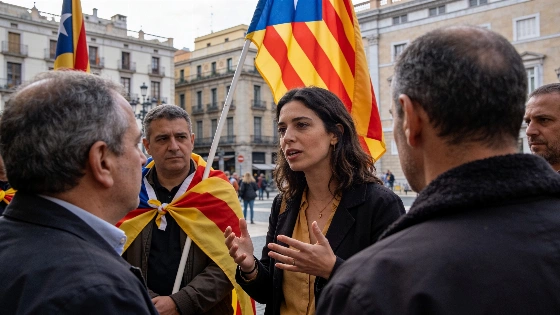
Sílvia Orriols, who leads Aliança Catalana and serves as mayor of Ripoll, has become a prominent figure in this shift. During the recent Diada, she used divisions within the pro-independence left to amplify her message. Orriols has turned controversy to her advantage: her municipality distanced itself from a speaker’s inflammatory remarks, but this only seemed to boost her standing. Even accusations of nepotism, such as her daughter’s job in the local police, have not weakened her support among those looking for a more radical alternative. Spanish media reports note that Orriols’ leadership has made the party’s rise more personal, and criticism from opponents has not shaken her core base.
Aliança Catalana has built its strongest base in Girona and the inner Pyrenean regions, where it already had a municipal presence before its recent surge.
The current government, led by Salvador Illa, presents itself as stable but faces ongoing problems with social divisions and underperforming public services. The resignation of high-profile officials, including Josep Lluís Trapero, has exposed weaknesses in the administration. Junts, meanwhile, is waiting to see whether Carles Puigdemont will return after recent judicial developments. These uncertainties have given ultra-right parties an opening to present themselves as the only ones willing to address public frustration directly. Coverage in El Mundo and other Spanish outlets says the Illa government is under pressure from both the ultra-right and broader political instability.
During the Diada, Catalanist groups called for coexistence, but their message was overshadowed by the growing influence of ultra-right parties. The political class now faces a test: move beyond statements and reach real agreements that address the causes of public discontent. Without this, the ultra-right is likely to become a permanent part of Catalonia’s political scene, especially as the next elections approach in 2027.
Official reactions to the rise of the ultra-right have focused on coexistence and rejecting hate speech. In his Diada address, President Salvador Illa explicitly linked his message to the growth of Vox and Aliança Catalana, insisting that there is no place for hate in Catalonia and emphasizing a unified, open identity.
The situation in Catalonia is part of a wider trend across Europe, where voters have turned to hardline parties after years of unmet expectations and social change. Giuliano da Empoli’s "Los ingenieros del caos" describes how, once political taboos are broken, it is nearly impossible to restore them. As traditional parties struggle to adapt, calls for more radical solutions grow louder. For Catalonia’s leaders, the message is clear: unless they move quickly from talk to real reform, the ultra-right could become a lasting force, with real consequences for democracy and social cohesion.