From October, Spain’s urban traffic lights will operate under new rules. The DGT aims to reduce risks for pedestrians and cyclists. The update ends a long-standing ambiguity at crossings.
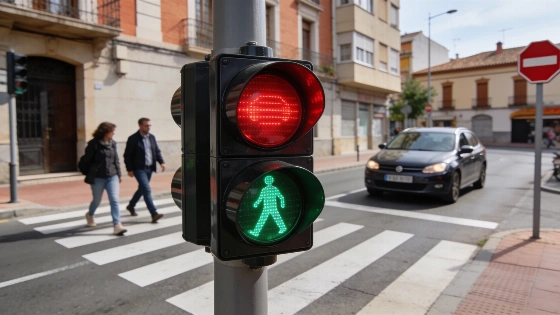
Spain’s Ministry of the Interior has announced a significant update to the Reglamento General de Circulación, set to take effect on October 1. The reform, driven by the Dirección General de Tráfico (DGT), directly targets the safety of pedestrians and cyclists by changing how urban traffic lights function at pedestrian crossings. The most notable shift: the end of the simultaneous flashing amber for vehicles and green for pedestrians, a combination that has long caused confusion and accidents in Spanish cities.
Until now, many urban intersections allowed vehicles to proceed with caution when the amber light flashed, even as pedestrians had a green signal. This overlap, especially at turns or in areas with limited visibility, often led to misunderstandings and, in some cases, collisions or near-misses. The DGT’s new regulation aims to eliminate this risk by prohibiting the flashing amber for vehicles from coinciding with the pedestrian green. Instead, every amber phase for vehicles must now be preceded by a solid red, forcing a clear stop before any transition.
This adjustment will require technical changes to thousands of traffic lights across Spain, particularly in cities where the old system was standard. The DGT expects the measure to clarify right-of-way at crossings and reduce the number of incidents involving vulnerable road users. According to the Ministry, the update is part of a broader push to modernize urban mobility and prioritize non-motorized transport safety.
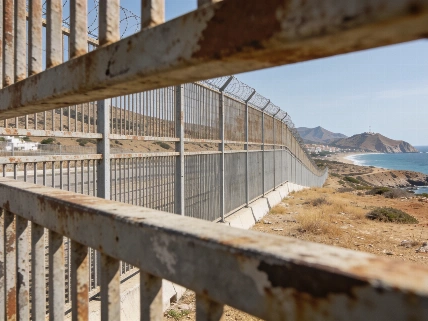
While the reform focuses on traffic signals, it reflects a wider trend in Spanish policy to address urban safety and adapt infrastructure to changing mobility patterns. The move comes as authorities across Europe seek to balance vehicle flow with the protection of pedestrians and cyclists. In a related context, efforts to improve urban management and public safety have also been seen in other areas, such as the recent initiative to relocate migrants from Ceuta’s streets, as reported in coverage of emergency shelter measures in Ceuta.
For residents and drivers, the practical impact will be most visible at busy crossings and intersections. The DGT advises motorists to pay close attention to new signal patterns and reminds pedestrians that the green light now guarantees a safer crossing. The reform is expected to reduce ambiguity, streamline traffic flow, and reinforce Spain’s commitment to road safety. As cities adapt their infrastructure, the coming months will show how these changes affect daily mobility and accident rates nationwide.
Spain’s approach aligns with broader European efforts to protect vulnerable road users. According to the European Commission, harmonizing traffic signals and prioritizing pedestrian safety are key strategies in reducing urban road fatalities. The DGT’s update may serve as a model for other countries facing similar challenges at urban crossings. For now, Spanish cities are preparing for a transition that could reshape the daily experience of millions of residents and visitors.