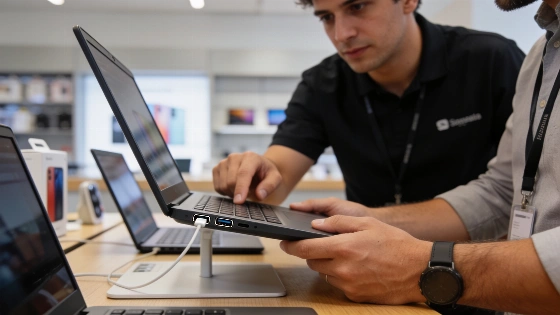
From April 28, every new laptop sold in Spain and across the EU must include a USB-C charging port. This final step in the universal charger law aims to simplify device charging, cut electronic waste, and give buyers more flexibility when choosing accessories.
Any new laptop placed on the market in Spain or the European Union after April 28 must now feature a USB-C port for charging. This marks the completion of the EU’s universal charger initiative, which previously standardized charging ports for smartphones, tablets, and cameras. For consumers, it means the era of proprietary laptop chargers is officially over.
The new rule, part of the EU’s Directive 2022/2380, obliges manufacturers to equip all new laptops with USB-C charging. Brands were given extra time to adapt, as laptops require higher power delivery than smaller devices. Now, regardless of brand or model, buyers can expect a single, widely compatible charging port on every new laptop sold in Spain and the rest of the EU.
One Cable for All Devices
The regulation is designed to end the confusion and waste caused by each manufacturer using its own charging standard. For years, even laptops from the same brand often required different chargers, leading to drawers full of unused cables and adapters. With USB-C as the common standard, a single cable and charger can now power a phone, tablet, camera, and laptop—provided the charger meets the device’s power needs.
Consumers also gain the right to buy a laptop with or without a charger, a practice known as unbundling. This lets buyers avoid paying for an extra adapter if they already own a compatible one, potentially lowering costs and reducing the pile-up of unused accessories. The change applies only to laptops first sold after the April 28 deadline.
Reducing Waste and Saving Money
One of the EU’s main goals is to cut electronic waste. According to the European Commission, discarded or unused chargers generate around 11,000 tonnes of e-waste each year. By making cables and adapters reusable across devices, the regulation aims to shrink this figure and support the EU’s broader circular economy policies.
There’s a financial benefit as well. The Commission estimates that consumers could save up to €250 million annually by not having to buy unnecessary chargers. The option to purchase devices without bundled adapters gives buyers more control and helps prevent the accumulation of unwanted accessories at home.
For those who already have a compatible charger, the new rule means less clutter and more convenience. It also aligns with other practical advice for reducing household waste, such as the guidance on avoiding plumbing issues by not disposing of coffee grounds in toilets, as discussed in this recent article.
Universal Fast Charging
The directive doesn’t just standardize the port—it also harmonizes fast charging technology. This prevents manufacturers from limiting charging speeds when users opt for third-party or cross-brand chargers. As a result, consumers can expect consistent charging performance, regardless of which compatible cable or adapter they use.
With laptops now included, the EU’s universal charger policy covers nearly all major categories of everyday electronics. For buyers in Spain, the shift to USB-C means fewer cables, less waste, and a simpler experience when powering up their devices.