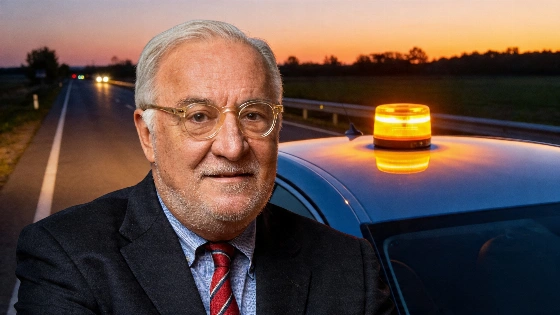
The DGT’s summer campaign to promote the V16 emergency beacon has led to a noticeable price increase. Manufacturers have removed previous discounts, citing stalled sales and regulatory confusion. The measure affects all Spanish drivers.
Prices for the mandatory V16 emergency beacon are climbing across Spain, coinciding with the Dirección General de Tráfico’s (DGT) new summer campaign to promote its use. The move comes after months of pressure from manufacturers, who have argued that unclear regulations and a lack of public information have stalled sales of the device, now required in all vehicles since January.
By mid-June, online retailers had already withdrawn previous discounts on V16 beacons, with prices moving well above earlier promotional offers. While current prices have not yet reached the highs seen before the regulation took effect—when some units sold for over 50 euros—the upward trend is clear. The competitive environment that once drove down prices has faded, replaced by a market where manufacturers and distributors are no longer pushing to clear excess stock.
The DGT’s campaign, funded with public money, is intended to boost adoption of the V16 beacon after a period of sluggish sales. According to statements from DGT director Pere Navarro, the campaign responds to what he describes as a “stagnation” in the market, which he attributes to confusion and uncertainty during the initial rollout of the new requirement. The campaign is expected to increase visibility and, in turn, sales of the device, but it has also provided an opportunity for manufacturers to raise prices as demand is expected to grow.
Industry representatives have repeatedly called for clearer rules and more consistent communication from the DGT, warning that the lack of clarity has not only affected road safety and consumer confidence but also put pressure on Spanish manufacturers who have invested heavily in developing compliant devices. The case of Netun Solutions, the company behind the original V16 beacon, highlights the strain: the firm has entered pre-bankruptcy proceedings, citing low sales despite the legal obligation for drivers to carry the device. The company has publicly blamed the DGT for insufficient information reaching motorists.
The V16 beacon replaces the traditional warning triangle and is designed to improve roadside safety by making stopped vehicles more visible in case of breakdown or accident. Since January 2026, all vehicles in Spain must carry a certified V16 device. The DGT’s campaign is part of a broader effort to reduce road fatalities and modernize safety standards, but the current price increases may pose an additional burden for drivers. For context, Spain has one of the most ambitious road safety programs in Europe, and the V16 beacon is a key element in the country’s strategy to reduce secondary accidents on highways. The device must meet strict technical standards, including connectivity features, and only approved models are legal for use. As the summer travel season begins, the impact of higher prices and renewed enforcement is likely to be felt by millions of motorists across the country.