The Valencia Provincial Court has confirmed the exoneration of the municipal technician in the 2022 Mislata inflatable accident. The decision leaves only the owners and engineer facing charges after two girls died.
The Provincial Court of Valencia has confirmed the exoneration of the municipal technician involved in the 2022 Mislata inflatable tragedy, rejecting the appeal filed by the parents of one of the two girls who died. The ruling maintains that the official responsible for reviewing the documentation of the fairground operators bears no criminal liability in the fatal incident that shocked the local community.
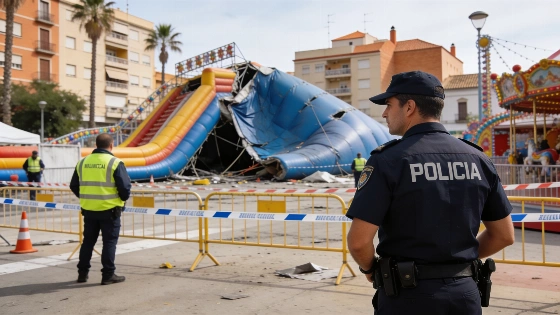
The case stems from the events of January 4, 2022, when a strong gust of wind struck a fairground inflatable attraction installed on Escultor Miquel Navarro street in Mislata. The sudden wind caused the 'Humor amarillo, la selva' inflatable to lift and overturn, throwing several children from the structure. Two girls were fatally injured after being projected onto the ground, while others suffered lesser injuries. The incident led to a criminal investigation into the safety measures and responsibilities of those involved in the attraction's installation and operation.
Earlier, the investigating judge had decided to continue proceedings against the two owners of the inflatable and the engineer who designed the installation, citing possible gross negligence. However, the case against the municipal technician was closed, as the court found no evidence that the official had failed to fulfill his duties regarding the verification of the required documentation. The judge noted that the technician had checked all documents submitted with the responsible declaration, including the engineer's certificate for the installation and operation of the attraction.
The parents of Vera, one of the victims, challenged this decision, arguing that the necessary responsible declaration for the Christmas fair had not been submitted, that no report from the Organismo de Certificación Administrativa (OCA) was provided, and that the paperwork processed referred to a different event and location. Despite these claims, the court found that the applicable regional regulations did not require an OCA certificate for such installations, and that the municipal authority was not obliged to inspect the attraction if all legally required documents were presented.
Expert reports highlighted several contributing factors to the accident, including the force of the wind, inadequate anchoring, poor condition of the securing straps, and a different placement of the inflatable than specified in the engineer's project. The court concluded that these issues were outside the scope of the municipal technician's responsibilities, as his role was limited to reviewing the submitted paperwork, not the physical inspection or ongoing supervision of the attraction.
The court's decision also referenced a 2019 consultation by the Mislata City Council to the regional Agency for Security and Emergency Response, which clarified that installations like the inflatable could operate from the day the responsible declaration was filed, without further formalities. The agency confirmed that while the municipality could inspect such attractions, it was not mandatory unless defects were detected or suspected.
In a related context, the issue of official responsibility and oversight in public safety incidents has been a recurring topic in Spain. For example, a recent case in Madrid involving a serial impostor posing as a Guardia Civil highlighted the challenges authorities face in ensuring compliance and public trust in regulatory processes.
According to the court's final order, there is insufficient evidence to justify criminal charges against the municipal technician, even at the preliminary stage. The focus of the ongoing criminal proceedings remains on the owners of the inflatable and the engineer, as the investigation continues into the failures that led to the tragic deaths in Mislata. This case has drawn attention to the complexities of safety regulation at local fairs and the limits of municipal oversight under current Spanish law. In Spain, the legal framework for temporary fairground attractions is governed by both national and regional regulations, with municipalities often relying on self-declarations and technical certificates from private engineers. The outcome of this case may influence future discussions on tightening safety protocols and clarifying the responsibilities of public officials in similar events.