Valencia’s new school year opens with over 800,000 students and nearly 84,000 teachers. A simmering conflict with unions over class sizes and working conditions threatens stability. Authorities insist on gradual reforms despite union demands.
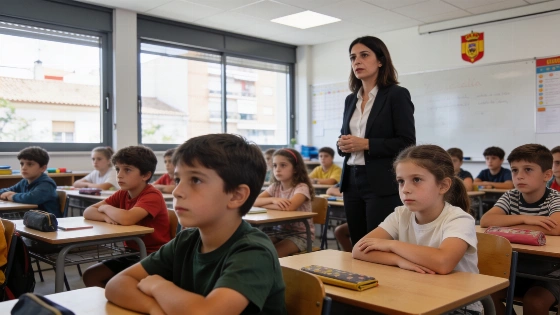
The new school year in the Comunidad Valenciana begins under the shadow of a standoff between education officials and public sector unions, with the threat of renewed strikes still looming. Even with more teachers on staff, the government’s refusal to sharply cut class sizes has left talks at a standstill as 808,688 students return to class.
Education chief Mari Carmen Ortí says her department will stick to its plan for gradual, resource-backed class size reductions, calling union demands for a maximum of 15 pupils per class in Infantil and Primaria unrealistic with current facilities and staffing. The official target this year is 25 students per class. Unions argue that number is too high for effective teaching and manageable workloads.
According to Spain's Ministry of Education, the national average class size in primary education was 21.9 students in the 2022/2023 academic year, highlighting that Valencia's target of 25 remains above the national mean.
Ortí points to a record €3.338 billion investment in education through 2029, including €802.3 million for teacher pay, €469.12 million for the Plan Més Mestre, and €1.41 billion for school upgrades. But these figures have not eased union frustration, especially after last year’s nearly month-long strike that ended the previous academic cycle without a deal.
This year, Valencia province will have 404,450 students, Alicante 305,280, and Castellón 98,958—a slight drop from last year. The teaching workforce has grown by 385, reaching 83,921. The school year runs from September 9 to June 18, 2027, covering all levels from Infantil to Formación Profesional.
Union leaders remain focused on immediate changes to classroom conditions, not future investments. The administration argues that cutting class sizes quickly would require new buildings and a hiring surge that can’t be delivered on the unions’ timeline. Ortí has also criticized national ministry proposals for even lower ratios in early childhood education, warning that such measures could leave some children without a school place and undermine legal guarantees of universal access.
Recent data from the OECD shows that Spain spends approximately 4.3% of its GDP on education, which is slightly below the EU average. Experts from El País note that while investment in teacher salaries and infrastructure is increasing in Valencia, the region still faces challenges in aligning class sizes and resources with broader European standards.
While the government projects confidence in its ability to deliver "quality public education" and support for both teachers and families, the unresolved dispute risks more disruption. The situation in Valencia reflects broader tensions seen elsewhere in Spain, where education reforms and labor unrest often collide. For context, recent developments in other sectors, such as the clearance of migrant camps near Melilla, show how policy decisions can quickly reshape local realities.
Valencia’s education authorities are betting on incremental change and increased funding to win over teachers and parents. But with unions ready for more confrontation, further strikes and classroom instability remain likely. Unless both sides find common ground, families and students will stay caught in a dispute that shows no sign of ending soon.