Ten days after the double earthquake in northern Venezuela, the official death toll has reached 2,954. The government is rolling out monthly payments and housing subsidies, but protests and aid shortages persist in the hardest-hit areas.
The aftermath of the devastating double earthquake in northern Venezuela continues to unfold, with the official death toll now at 2,954 and more than 16,500 injured. Government authorities have announced a series of emergency support measures, including monthly financial assistance for affected families over the next six months and mortgage subsidies covering up to 80% of housing costs. Despite these efforts, thousands remain displaced, and the humanitarian situation in La Guaira, the region most severely impacted, is growing increasingly tense.
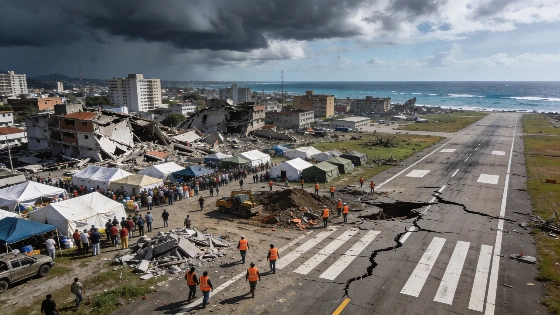
In La Guaira, residents of Caraballeda have blocked roads to demand the promised relocation and to protest the reduction in food aid. Families of the missing are urging authorities to maintain search operations amid ongoing debris removal and infrastructure repairs. The government is also prioritizing the restoration of the Maiquetía International Airport, which suffered extensive damage during the earthquakes. Acting president Delcy Rodríguez has announced the formation of an international alliance to rebuild the airport, with a detailed plan expected next week, though participating countries have not yet been specified.
Telecommunications companies Digitel and Movistar, supported by the Starlink satellite network, are working to restore communications in affected zones. Free Wi-Fi points have been set up in shelters to help displaced residents stay connected. On the healthcare front, a Spanish field hospital operated by the START team is now treating up to 200 patients daily in Caracas, providing both basic and emergency medical care. International aid continues to arrive, while Venezuelan authorities have begun to formally thank and bid farewell to foreign rescue teams from over 20 countries, acknowledging their critical role in the initial response.
Personal stories from survivors highlight the human cost of the disaster. Iván Gutiérrez, 62, managed to escape a collapsed shopping center in northern Caracas with his niece and son, but lost his 82-year-old father in the destruction of their residential building. Migdalia Torres, a 56-year-old publicist, was rescued from the rubble of her home after 39 seconds that were enough to bring down the entire structure. She described her survival as a blessing, despite the loss of her father.
As the government accelerates debris clearance and infrastructure repairs, tensions remain high in the most affected communities. Some residents report a decrease in humanitarian aid and continue to demand that search efforts for missing persons persist. The government has reiterated its commitment to rehabilitate not only the main airport but also other damaged facilities. Meanwhile, acting president Delcy Rodríguez, who is recovering from a viral infection, has assured the public that her health issues have not hindered her management of the crisis.
According to the latest figures, over 16,300 people have lost their homes, and thousands of buildings have been damaged. The scale of the disaster has prompted widespread mobilization of both local and international resources. As noted in a related report, civil society and foreign teams have played a crucial role in relief efforts, often stepping in where state response has struggled to keep pace.
Venezuela's recent earthquakes are among the deadliest in the region's history. The country's seismic risk is heightened by its location along the Caribbean tectonic plate boundary, making preparedness and rapid response critical. The ongoing crisis underscores the challenges of disaster management in areas with vulnerable infrastructure and limited resources. As recovery continues, the effectiveness of government aid and the resilience of affected communities will remain under close scrutiny.