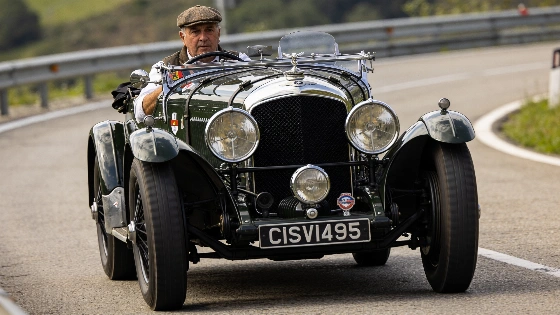
Engines from another era thundered through Langreo as 35 pre-1945 cars tackled the Cisvial circuit. The international rally fused competition with luxury travel, drawing collectors and enthusiasts from across Europe.
Seventy-year-old engines—and some even older—broke the quiet of Langreo’s Cisvial circuit as the international “Vintage El Clavel” rally returned rare pre-1945 cars to the track. For a few hours, the air filled with the distinctive sound of combustion, a scene that feels almost surreal in an era dominated by electric vehicles.
In September 2026, the Cisvial circuit in Langreo became a focal point for vintage rally cars, highlighting Asturias as a new hotspot for historic automotive events.
The rally’s route covers roughly 1,500 kilometers, from Las Caldas in Oviedo to the Palacio de la Magdalena in Santander, intentionally avoiding highways. Participants navigate secondary roads and private circuits, ending each day in a different luxury hotel. José María Manmana, part of the organizing team, explains that the rally is as much about social connection and enjoyment as it is about competition. “These are rallies of social activity and enjoyment. Each night is spent in a different, very elegant hotel, and during the day there are two or three competitive stages,” he says. Independent reports emphasize that these rallies focus on showcasing historic vehicles rather than pure speed, reinforcing the event’s unique blend of tourism and motorsport.
Support is extensive: a team of doctors, mechanics, marshals, and judges travels with the group, ensuring that even if a prized classic breaks down, its owner can continue the journey—albeit in a rental car, without eligibility for prizes. “If our mechanics can’t repair it, you can continue with a normal rental car and do all the stages, just without receiving the prize,” Manmana notes. The emphasis is on completing the experience, not just the race.
In September 2026, Langreo hosted not only the vintage rally but also other motorsport events, such as the IV Open de Asturias Rally Slot Ciudad de Langreo, which focused on miniature racing. This distinction helps clarify the region's busy automotive calendar and highlights the growing interest in classic and pre-war vehicles across Spain, as seen at events like the Concurso de Elegancia Costa del Sol.
For Langreo Motor Club, hosting the rally is a strategic win. Sasi Pardeiro, representing the club, highlights its significance: “For us, it’s important that these cars pass through here, that such a prestigious rally remembers northern Spain and specifically Langreo. Having them come to Cisvial for a timed stage is a source of satisfaction.”
The rally’s arrival in Langreo comes as Spain’s automotive landscape is rapidly evolving. While historic engines roar at Cisvial, manufacturers like Volkswagen are setting new benchmarks in electric and hybrid production, as reported earlier. The contrast between past and future is stark, yet both worlds coexist—one celebrating heritage, the other pursuing innovation.
Events like “Vintage El Clavel” do more than showcase rare machinery; they reinforce Spain’s place on the map for international automotive tourism and highlight the enduring appeal of classic engineering. As the rally concludes with a gala dinner in Santander, the passion for motoring history remains strong, even as the industry accelerates toward a quieter, electrified future. For Langreo and the region, welcoming such a rally is not just a nod to nostalgia—it’s a statement of relevance in the evolving story of European motoring.