Volkswagen’s Mission Efficiency prototype sets a new benchmark for energy use in electric cars. With a drag coefficient of 0.158 and solar panels that add daily range, it shows how much more mainstream EVs could achieve.
Volkswagen’s Mission Efficiency prototype takes a fresh approach to how far electric cars can go on a single charge. With a drag coefficient of 0.158, the car’s aerodynamic design isn’t just a technical feat—it directly questions what’s possible for everyday electric vehicles. According to Volkswagen and several automotive publications, this is a record for road-legal or near-production EVs.
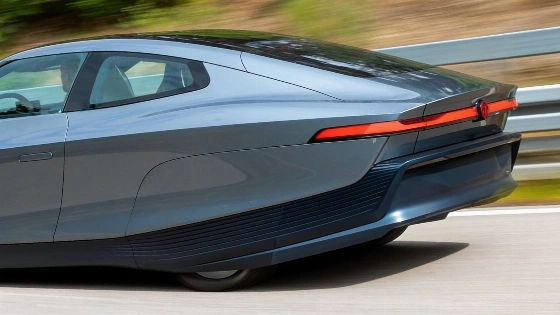
The car’s shape brings to mind the old XL1, but this time the focus is fully electric. Engineers used the ID. Polo’s 99 kW (135 CV) motor and added features rarely seen outside concept cars. The body is all about reducing drag: a closed-off front, solid wheels, hidden door handles, and a rear section that covers the wheels. These aren’t just for looks. At 80 km/h, the Mission Efficiency uses over 30% less energy than a standard ID. Polo. At 140 km/h, it matches the Polo’s consumption at just 100 km/h.
The Mission Efficiency is built on the MEB+ platform, features a 54.9 kWh battery, and is front-wheel drive—specifications officially confirmed by Volkswagen.
Inside, the car keeps things simple. It’s 4.77 meters long and 1.39 meters high, with a low, streamlined profile. There’s a 2+2 seating layout and a 481-liter trunk, though the rear seats are best for passengers under 1.60 meters tall. Volkswagen says a young family of four could use it, but the details tell the real story: lightweight materials, a stripped-down interior, no built-in sound system (just a portable Bluetooth speaker), and the multimedia system replaced by the driver’s smartphone. These details are confirmed by both Volkswagen and independent reviews.
The Mission Efficiency stands out for using technology that’s ready for production. Solar panels in the glass roof and tailgate can add up to 30 kilometers of range per day in ideal conditions. An electromechanical rear brake cuts friction and simplifies the system. The chassis uses aluminum, carbon fiber-reinforced polymer, and aramid to keep weight down. Under the best conditions—steady 68 km/h, flat roads, no air conditioning—the car uses just 6.48 kWh per 100 kilometers. Automotive media have reported real-world figures as low as 6.89 kWh/100 km, backing up Volkswagen’s efficiency claims.
Thomas Schäfer, Volkswagen’s CEO, put it simply: “Mission Efficiency is the form ideal of what distinguishes Volkswagen in the era of electric mobility: technology for the masses, not just for a few.” The prototype isn’t headed for production, but it shows what’s possible using affordable, production-based parts from the ID. Polo and ID. Cross, all on the MEB+ platform with front-wheel drive. Germany’s Record Institute (RID) has certified the Mission Efficiency as a near-production, everyday-use four-seat EV and recognized three efficiency records.
Volkswagen and several independent automotive outlets report that the Mission Efficiency achieved a range of approximately 1,278 km on a single charge during a Wolfsburg–Vienna route, with only one charging stop. This performance was verified under real-world conditions and is used as a benchmark for the car’s exceptional efficiency.
Volkswagen’s strategy is different from the usual push for bigger batteries and more powerful motors. The Mission Efficiency shows that major gains come from rethinking basics like weight, aerodynamics, and energy recovery. This approach fits with the recent trend toward affordable electric cars, as seen when Dacia’s Spring 2027 broke price barriers for city drivers, as reported earlier.
The Mission Efficiency won’t go on sale, but its point is clear. Volkswagen has shown that top-level efficiency isn’t just for expensive, limited-run models. By focusing on proven technology and the fundamentals, the company has set a new standard for what electric cars can do. For an industry often focused on range and acceleration, this prototype is a reminder that the next big step might come from making more out of less—and making it available to more people.