Volkswagen is pressing European leaders and industry to close ranks against global rivals. The For Europe plan aims to protect 476,400 jobs and ramp up electric car output, with Spain set as the launchpad for new urban EVs.
Volkswagen’s top brass landed in Paris with a blunt demand: Europe’s politicians and auto giants need to close ranks or risk losing their grip on the industry. The For Europe campaign lands as a direct answer to rising global pressure and the threat hanging over hundreds of thousands of European jobs.
The numbers are stark. Volkswagen employs 476,400 people across Europe, making up 72% of its global headcount. Its 55 factories span 16 countries. Last year, European operations delivered 3.94 million vehicles, or 44% of the group’s worldwide sales. But the company is now deep into a sweeping overhaul. OSW research confirms Volkswagen has already agreed to cut about 50,000 jobs, with the total reduction possibly hitting 100,000 by 2030. The plan also calls for slashing annual output by 1 million vehicles, down to 9 million, and trimming the number of models and variants to tackle overcapacity and high costs.
The future of Volkswagen plants in Emden, Zwickau, and Hanover, as well as Audi's site in Neckarsulm, is under review, with decisions on their long-term fate expected by June 2027.
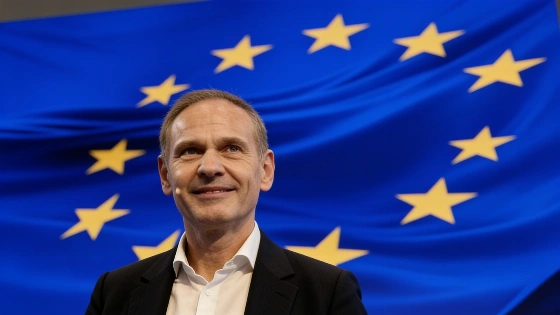
CEO Oliver Blume didn’t mince words at the Paris launch. “Las crisis geopolíticas y la presión competitiva global, que crece a gran velocidad, exigen a Europa —igual que nos lo exigen al Grupo Volkswagen— avanzar más rápido e impulsar el cambio con determinación.” He insisted Europe has the industrial and tech muscle to hold its ground, but warned that both companies and lawmakers need to move fast. Blume called for immediate decisions on European content rules, CO₂ standards, and trade terms with China.
Spain is now the proving ground for Volkswagen’s electric push. The Electric Urban Car Family—Volkswagen ID. Polo, Volkswagen ID. Cross, Škoda Epiq, and CUPRA Raval—will all be developed and built there. AWP reports nearly 150,000 pre-orders across the four models before a single delivery. That’s total program demand, not just one car, which matters for reading the numbers. Production splits between the Seat plant in Martorell and Volkswagen’s Pamplona site, with 50,000 orders for the VW ID. Polo alone. This surge is already testing factory limits and gives Volkswagen a real-world case that European-built EVs can hold their own globally.
AWP confirms over 80% of the parts and tech in these models are shared. That lets Volkswagen cut costs and speed up launches, while keeping each brand’s identity intact. The group is betting on shared platforms and AI-driven processes to strip out complexity and get new cars to market faster. Thomas Schäfer, who heads the Volkswagen brand and Brand Group Core, put it plainly: “La Electric Urban Car Family demuestra lo que significa ‘For Europe’ en la práctica: coches atractivos, desarrollados y fabricados en Europa, que la gente realmente quiere.”
Volkswagen’s restructuring extends beyond assembly plants: its software subsidiary CARIAD has announced plans to cut about 1,000 of its 4,300 jobs, highlighting that digital operations are also under pressure as part of the group’s transformation.
Volkswagen’s reach in Europe goes far beyond its own plants. Seven of its ten biggest suppliers are European, with annual purchases topping €100 billion. The company’s message is blunt: without rules that back local production and fair competition, Europe could lose its auto edge. OSW analysts see For Europe as more than an EV push—it’s a bid to win better terms for European industry as costs rise and capacity sits idle.
Finance chief Arno Antlitz says the group isn’t walking away from innovation. Instead, Volkswagen wants to focus investment and use its scale, brands, and shared tech to stay competitive. The plan is to combine tough restructuring and tight investment with new product launches, all while navigating the hurdles of electrification, global rivalry, and political uncertainty.
Volkswagen’s call for a united European front comes as rivals scramble to adapt. Hyundai, for example, is rolling out new models and tech to chase the same market.
Volkswagen’s move to anchor electric urban car production in Martorell and Pamplona locks in thousands of jobs for Spain and puts the country at the center of Europe’s EV ambitions. The For Europe plan makes clear that industrial leadership will go to those who can align political will and manufacturing muscle. Anything less, and Europe risks falling behind global competitors.