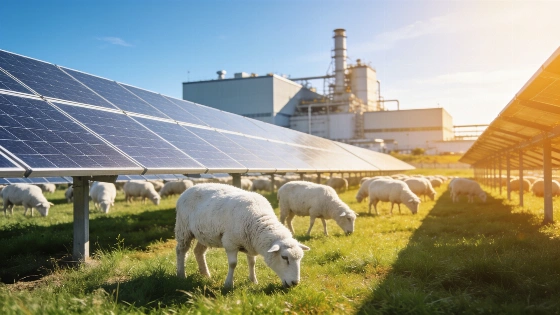
Volkswagen has swapped lawnmowers for a flock of 100 sheep at its Września factory in Poland. The animals help manage vegetation beneath 31,000 solar panels, while scientists study the impact on biodiversity, soil, and animal welfare. The project aims to cut emissions and rethink land use at industrial sites.
At Volkswagen's Września plant in western Poland, the hum of lawnmowers has been replaced by the quiet grazing of nearly 100 Wielkopolska sheep. The automaker has introduced the flock to manage vegetation beneath its sprawling solar park, which covers 27 hectares and powers a significant share of the factory's operations.
The solar installation, managed by Quanta Energy, consists of more than 31,000 panels and delivers up to 18.3 megawatts of electricity. On sunny days, it can meet the entire energy demand of the industrial complex. Over the course of a year, the solar park supplies about a quarter of the plant's total electricity needs, making it one of the largest factory-connected photovoltaic sites in Europe.
Sheep Replace Machines
Instead of relying on mechanical mowing, Volkswagen now uses the sheep to keep grass and weeds in check. This approach reduces the need for heavy equipment to move between solar arrays and electrical infrastructure, lowering emissions and minimizing disturbance to the site. The panels themselves offer shade and shelter for the animals during hot weather, creating a mutually beneficial environment.
The sheep, all of the local Wielkopolska breed, arrived at the site in late April and will remain until autumn under the care of their owner, Justyna Nowak-Gajek. According to Nowak-Gajek, the animals have adapted quickly, grazing calmly in small groups—a sign of comfort and security. The breed, once common in Poland, is now part of a national genetic conservation program.
Scientific Study in Action
The project is more than a maintenance solution. In partnership with the University of Life Sciences in Poznań, Volkswagen is supporting one of Poland's first large-scale studies on the intersection of renewable energy, livestock, and biodiversity. Researchers are monitoring the sheep's behavior and welfare, the quality of the pasture, soil properties, and microclimate conditions across the solar park. They are also tracking environmental factors such as ammonia emissions and the broader ecological impact of the solar installation.
The findings are expected to inform future agrivoltaic projects, helping to define best practices for combining livestock with renewable energy production. By turning routine groundskeeping into a scientific experiment, Volkswagen is testing how industrial land can serve multiple purposes—generating clean power, supporting local breeds, and fostering biodiversity.
Rethinking Industrial Land Use
This initiative reflects a growing trend among European manufacturers to maximize the value of their land while reducing environmental impact. Integrating grazing animals with solar parks is seen as a way to enhance sustainability, cut operational costs, and contribute to conservation goals. As the results from Września emerge, they may shape how other companies approach the challenge of balancing industry, agriculture, and ecology on the same ground.