Ursula von der Leyen has unveiled a European security initiative that leaves out the US. The plan responds to growing uncertainty over Washington’s commitment to Europe’s defense and signals a shift in EU strategy.
Europe is bracing for a future where US protection is no longer a given. Ursula von der Leyen, President of the European Commission, has introduced a security plan for the EU that leaves out the United States—a clear break from decades of transatlantic dependence. The timing is no accident: Donald Trump’s administration has signaled a retreat from European defense, forcing Brussels to reconsider how it handles its own security.
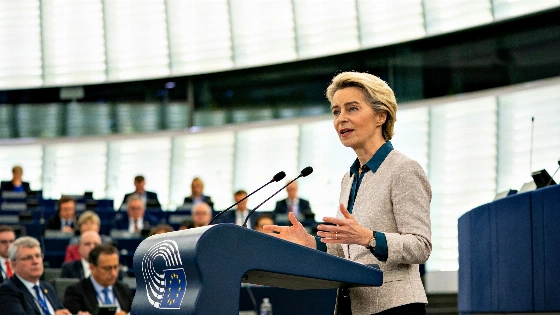
In a 75-minute speech to the European Parliament in Strasbourg on September 16, 2026, von der Leyen did not mention the US once in her 22-page address. Instead, she focused on building a European-led security system, inviting partners like Canada, Norway, and the United Kingdom to join—while leaving Washington aside. Canada’s Prime Minister Mark Carney was present in the chamber as von der Leyen proposed that Canada become the EU’s “first associated state” in security matters, a step short of full membership. According to Reuters and the European Commission, this is the first time such an "associate member" status has been publicly suggested for a non-European partner.
"The concept of 'associate member' is not currently defined in EU treaties, making this a political initiative that would require new legal mechanisms to implement."
Reuters
The reasons for this shift are clear. Trump has repeatedly threatened to withdraw US troops from Europe, pulled support from Ukraine, and shown open hostility toward the European project. In response, the EU is speeding up work on its own defense structures, including a European Security Council that would bring together leaders from member states and select allies to coordinate strategy. Reports indicate this council would include not only EU members but also partners like Canada, Norway, Ukraine, and the UK, reflecting a broader network approach to security.
Von der Leyen’s plan borrows from NATO’s Article 4, which allows any ally to call consultations if its territory is threatened. But the EU’s version would operate independently of Washington, reflecting a new reality where multilateralism is under strain and power politics are back in play. The Commission is also working on implementing Article 42.7 of the EU treaties, which requires mutual defense among member states—a clause sometimes compared to NATO’s Article 5, though it has rarely been tested. According to materials from the European Parliament’s September session, there is renewed attention on strengthening the eastern flank and countering hybrid threats, with the EU running scenario analyses to test its collective defense readiness.
Von der Leyen says the EU is not trying to oppose NATO—23 of the 27 EU countries are NATO members—but warns that European institutions and decision-making have not kept up with the current environment. The planned withdrawal of 5,000 US troops from Germany is just one sign of the changing situation. The EU is now running theoretical exercises to test its own mutual defense clause, though these efforts are still in early stages.
"The new partnership format with Canada is set to cover not only defense, but also Arctic security, energy, critical minerals, artificial intelligence, cybersecurity, and strategic technologies, as highlighted in multiple reports from September 2026."
Reuters
The growing distance from Washington is also visible in the EU’s approach to technology and artificial intelligence. Von der Leyen pointed to the risks posed by AI agents and called for a global debate with advanced partners such as the UK and Canada—again, with no mention of the US. This fits a broader pattern: the US, under Trump, has published a National Security Strategy that frames Europe as facing "the real prospect of civilizational disappearance" and supports far-right, eurosceptic parties to "correct" Europe’s direction.
Von der Leyen’s message is direct. She calls for a strong, independent Europe able to defend its values and shape its own future, warning against ultranationalists, anti-Europeans, Russian interference, and disinformation. Her goal is not just to resist these threats, but to unite around the European idea and defend it together.
This marks a turning point for European security. The EU is no longer waiting for reassurance from Washington. Instead, it is building its own alliances and systems, determined to protect its interests in a world where old certainties have faded. For Spain and other member states, this means adapting to a security environment where European cooperation is now essential. The next few years will show whether Brussels can turn these proposals into real capabilities—and whether Europe is ready to stand on its own.