Pouring a glass of white vinegar into a pool each week is a popular home remedy for tackling limescale and stains, especially in small pools. But does it actually work, and can it replace professional pool chemicals? Here’s what you need to know before trying this method.
Adding a glass of white vinegar to pool water has become a common tip among homeowners looking for simple ways to keep their pools clean. The idea is straightforward: vinegar’s mild acidity can help dissolve limescale and make it easier to remove stains, particularly along the waterline. But the real impact of this method depends on the size of the pool and how the vinegar is used.
White vinegar contains diluted acetic acid, which can break down mineral deposits and some organic residues. When applied directly to the waterline or stubborn spots, it can soften buildup, making it easier to scrub away. However, pouring a single glass of vinegar into a large pool—especially those holding over 20,000 liters—has almost no effect on the water’s pH or overall cleanliness. In these cases, the acid is so diluted that any chemical impact is negligible.
Where Vinegar Works Best
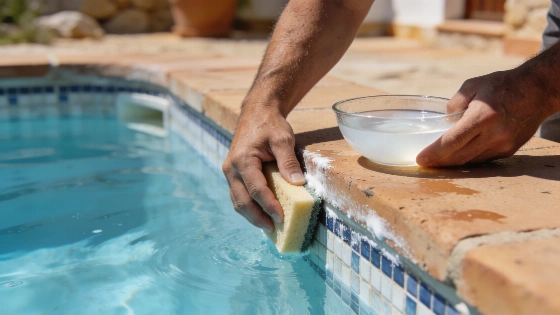
Vinegar is most effective in small, above-ground pools, inflatable models, or spas, where the water volume is limited. In these settings, a glass of vinegar can help reduce limescale and make routine cleaning easier. For larger pools, its use is best reserved for targeted cleaning—such as applying a vinegar-water mix directly to the waterline with a sponge or soft brush. Letting the solution sit for about 20 seconds before scrubbing can help loosen deposits without damaging surfaces.
Vinegar can also help with minor green stains left by algae, but it won’t solve a major algae problem. For significant algae growth, a chlorine shock treatment remains essential. Vinegar’s role is limited to light cleaning and preventive care, not full-scale water treatment.
How to Use Vinegar Safely
To avoid damaging pool surfaces or disrupting water balance, it’s important to dilute vinegar with water before applying it to the pool edge. Never pour more than one glass directly into the pool per week, and only do so in small pools or spas. Always check the water’s pH before and after adding vinegar—if the pH is already low, adding acid can push it out of the safe range, leading to potential problems for swimmers and pool equipment.
For large pools, the effect of a single glass of vinegar is so minimal that it won’t noticeably lower the pH or replace specialized pool chemicals. Attempting to use several liters of vinegar to adjust pH would be inefficient and costly compared to products designed for pool maintenance.
Advantages and Limitations
Vinegar is cheap, widely available, and doesn’t leave behind harsh chemical odors or residues when used for surface cleaning. It’s gentle enough for use on rubber seals and certain filter components, making it a practical option for spot cleaning. However, its mild acidity means it can’t match the speed or precision of professional descalers or pH adjusters. For small cleaning jobs, vinegar can be a cost-effective solution, but it’s not a substitute for proper pool care in larger installations.
What to Expect in Practice
For most standard pools, adding a glass of vinegar each week won’t significantly change water chemistry or prevent major buildup. Its main benefit is as a cleaning aid for small pools or specific surfaces. Regular water testing and the use of appropriate pool chemicals remain necessary for safe and effective maintenance, especially when dealing with algae or persistent water balance issues.
In summary, white vinegar can be a helpful tool for minor cleaning tasks and limescale prevention in small pools, but it’s not a cure-all. For larger pools, its impact is limited, and relying on it alone can leave water quality and hygiene at risk. As with any home remedy, understanding its limitations is key to keeping your pool safe and clean.