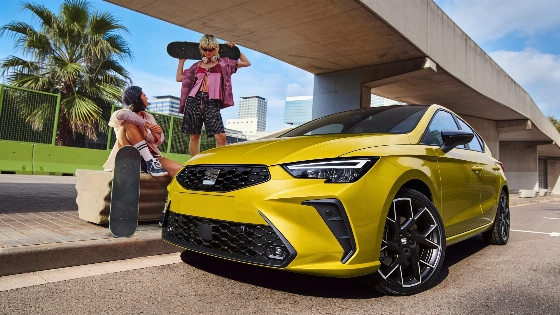
Seat Ibiza remains a top seller in Spain, but not all versions offer the same value. We break down the engines and trims to reveal which Ibiza stands out for performance, efficiency, and equipment.
Seat Ibiza continues to dominate Spanish streets, but the real challenge for buyers is choosing the right version. With prices starting at €16,520, the entry-level model may seem tempting, yet a closer look at its engine and features reveals why it might not be the smartest pick.
Engine Choices: Performance vs. Efficiency
The current Seat Ibiza lineup is powered exclusively by petrol engines, with three distinct options. The base 1.0 MPI engine delivers 80 hp, paired with a five-speed manual gearbox and front-wheel drive. While this setup achieves 0-100 km/h in 15.3 seconds and a top speed of 175 km/h, its real-world performance often feels underwhelming, especially when the car is fully loaded or driven outside the city. Fuel consumption is rated at 5.3 l/100 km, with CO2 emissions of 119 g/km—figures that offer no real efficiency advantage over more powerful alternatives.
Stepping up, the 1.0 TSI engine with 115 hp and a six-speed manual transmission transforms the Ibiza’s character. Acceleration improves to 9.9 seconds for 0-100 km/h, and the top speed rises to 200 km/h. Despite the extra power, this version is actually more efficient, with a combined consumption of 5.2 l/100 km and emissions of 116 g/km. For most drivers, this is the sweet spot: enough power for daily use and longer trips, without sacrificing fuel economy.
At the top of the range sits the 1.5 TSI with 150 hp, available only with a seven-speed DSG automatic. This model sprints to 100 km/h in 8.1 seconds and reaches 220 km/h, but its higher performance comes at the cost of increased consumption (5.7 l/100 km) and emissions (127 g/km). It’s a compelling choice for those who prioritize sporty driving, but the price jump and running costs make it less practical for the average buyer.
Trim Levels: From Basic to Fully Loaded
The Seat Ibiza offers seven trim levels, each adding more features. The entry-level Ibiza+ already includes Full LED headlights, 15-inch alloy wheels, air conditioning with dust and pollen filter, an 8-inch digital instrument cluster, Full Link connectivity (wireless and wired Android Auto and Apple CarPlay), and safety tech like Front Assist automatic emergency braking.
The Style trim upgrades to 16-inch Design alloy wheels, premium Aurora upholstery, a 10.25-inch Digital Cockpit, black headliner, and mint green air vents. Style+ adds dual-zone automatic climate control, wireless phone charging, adaptive cruise control, a rearview camera, and tinted rear windows. Style+ Sound brings a 9.2-inch navigation system, spare wheel, SEAT Connect Plus, and a premium SEAT Sound System with six speakers, subwoofer, and 300W amplifier.
For those seeking a sportier look, the FR trim introduces bucket-style front seats, darkened exhaust tips, exclusive FR bumpers, SEAT Drive Profile with driving mode selector, and a rearview camera. FR+ adds blind spot monitoring, wireless charging, signature Full LED lighting, keyless entry and start, and automatic high-beam assist. The top-tier FR+ Sound includes the advanced navigation system, SEAT Connect Plus, and the upgraded sound system.
Best Buy: The Smart Ibiza Choice
For buyers weighing their options, the 80 hp engine is best avoided. Its lackluster performance and negligible price advantage—typically just €1,000–1,500 less than the 115 hp version with the same equipment—make the upgrade worthwhile. On the other end, the 150 hp model is only justified for those who truly value sporty driving and are willing to pay a premium of up to €4,000 over the 115 hp variant, along with higher fuel costs.
The 115 hp 1.0 TSI stands out as the most balanced choice, offering strong performance, better efficiency, and a reasonable price. It’s not available with the most basic trim, but from the Style level upwards, equipment is generous and covers most needs. This approach mirrors the logic seen in other popular compact cars, such as the hybrid SUVs compared in our recent analysis of Toyota Yaris Cross and Kia Niro, where the mid-range engine and trim often deliver the best value for money.
Context and Outlook
Seat plans to introduce a mild-hybrid Ibiza by 2027, which could change the landscape for buyers seeking eco-friendly options. For now, all current versions carry the DGT C label, so environmental classification is not a deciding factor. The Ibiza’s evolution—growing in size, technology, and comfort—means it now competes with compact cars in practicality, making the right engine and trim selection more important than ever. As always, buyers should weigh their driving habits, budget, and desired features before making a final decision.