CNN, Politico and MS NOW reporters were barred from the White House on September 24, 2026, despite a federal order restoring their access. Politico said its credential was seized as the judge demanded an explanation.
The White House blocked journalists from CNN, Politico and MS NOW on Thursday, September 24, despite a federal judge ordering their immediate return. The ruling suspended Donald Trump's ban for 14 days and said the restrictions were probably unconstitutional. Hours later, the court demanded an explanation for why the restrictions were still being enforced.
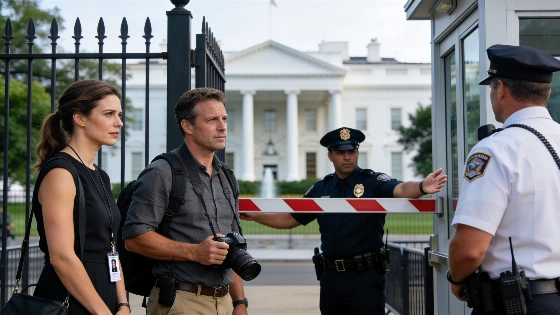
The dispute moved from the courtroom to the White House grounds. CNN reporter Betsy Klein and a CNN photojournalist were refused entry without being given a reason. A CNN producer entered the building using a pass. It was not immediately clear why that producer was admitted while the other CNN staff were turned away.
The White House restrictions began on September 19, when journalists from CNN, MS NOW and Politico were denied entry and their credentials were disabled or taken away, according to reporting by The Associated Press and other outlets.
Politico reported that its journalist's credential was confiscated. Reuters also reported that a Politico reporter was stopped after the judge's order. Politico separately confirmed that the credential had been seized.
MS NOW said its reporter could not enter either. The three outlets asked the courts to intervene after their personnel faced restrictions despite the order. The dispute over press access became a direct test of whether the executive branch would follow a judicial command.
Judge Timothy Kelly's overnight decision temporarily blocked Trump's ban. It was a setback for the president in one of his most prominent confrontations with the media. Trump had written on social media that the three outlets should not be allowed to keep reporting what he called "FICCIÓN y MENTIRAS". Justice Department lawyers defended the restrictions on national security grounds. The court had not accepted that explanation at this stage.
The timing added political significance to the ruling: it came shortly before Trump’s meeting with Chinese President Xi Jinping, making the dispute over press access especially visible as the White House prepared for high-level diplomacy.
The court then set another deadline. The White House was given two hours, until 18:30 Spanish peninsular time, to explain why the ban remained in place after the judge ordered it lifted.
Earlier on Thursday, Judge Timothy Kelly had ordered the affected press credentials restored immediately. He set 12:30 local time, or 16:30 GMT, for an explanation after the outlets reported access limits affecting some of their staff. The court's reasoning indicated that withdrawing the credentials likely violated due process.
Politico reporter Kyle Cheney described the timetable and the alleged failure to comply. The contrast with the institutional access dispute described in an earlier report is sharp. This case involves named media outlets and a federal order directed at the White House.
The practical issue is clear. CNN staff were split between those denied entry and one producer who got through. Politico said its credential was taken. MS NOW reported the same barrier for its journalist.
CNN's account pointed to selective enforcement. Klein and a CNN photojournalist were kept out while another employee with a credential entered. The actions took place after the judge ordered access restored, not before the court ruled on the outlets' request.
That sequence leaves little room for a harmless administrative explanation. The court suspended the ban for 14 days, called it likely unconstitutional and ordered the credentials restored. The journalists still faced exclusion, and one credential was confiscated.
The White House must now explain that gap. As Reuters reported and the outlets involved confirmed, the central question is whether the executive branch will carry out a direct judicial command instead of merely challenging it in court.