Bruce Willis' Family to Donate His Brain for Dementia Research. Bruce Willis' close relatives have decided to donate his brain to science. This decision is linked to the rare form of dementia that affects personality before memory. Spanish doctors stress the importance of such donors for future research.
Bruce Willis’s family has announced their intention to donate his brain to scientists after his death for the study of frontotemporal dementia. This illness led the actor to leave his profession in 2022 and is considered one of the most difficult neurodegenerative disorders to diagnose. Unlike Alzheimer’s disease, with frontotemporal dementia it is not memory but personality traits and behavior that are affected first.
According to Spanish neurologists, this form of dementia is most commonly found in people under the age of 65. In the overall structure of neurodegenerative diseases, it ranks third after Alzheimer’s disease and Lewy body dementia. In Spain, experts estimate that frontotemporal dementia is diagnosed in 0.2–0.3% of citizens over 65.
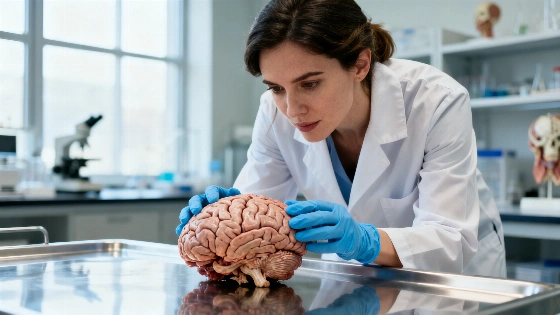
The Willis family’s decision highlights the growing role of brain donation for science. The country has a specialized tissue bank at the Center for Research into Neurological Diseases (CIEN)/Queen Sofia Foundation, which accepts both diseased and healthy samples. According to doctor Inés Moreno Sánchez (@latraumatologageek), only by comparing affected and healthy tissues can scientists understand how the disease develops and what exactly changes in the brain. She notes that MRI only provides a superficial picture, while real changes are visible only under a microscope.
The symptoms of frontotemporal dementia often confuse even specialists. The disease begins with changes in personality: a person loses their usual social filters, becomes impulsive or apathetic, and behaves in ways that previously seemed impossible. Memory remains intact for a long time, which is why the diagnosis is often mistaken for depression or other mental disorders. Depending on the affected area, speech problems may also occur: speech becomes slower, and there are difficulties with word selection and understanding meanings.
Historically, frontotemporal dementia is known as Pick's disease. It was first described by a Czech psychiatrist at the end of the 19th century, but it took decades for the diagnosis to gain recognition. Today, there is no effective treatment: doctors can only alleviate certain symptoms, using antidepressants or, in cases of aggression, antipsychotics. For speech impairments, speech therapy is prescribed to maintain communication.
In Spain, the topic of brain donation is becoming increasingly relevant amid an aging population and a growing number of neurodegenerative diseases. According to Fundación Pasqual Maragall, studying the brain after death allows researchers to develop new diagnostic methods and potential approaches to therapy. Importantly, in order to conduct a comprehensive analysis, scientists need not only affected samples but also healthy ones—only then can key differences and disease mechanisms be identified.
Issues of donation and medical research regularly attract public interest. For example, responsibility of the authorities for safety in schools was recently discussed in Madrid after a student was injured due to a faulty door — more details can be found in the article on the controversy surrounding school safety. Such topics highlight the importance of decisions that affect the health and future of society.
For reference: frontotemporal dementia is a group of diseases characterized by atrophy of the frontal and temporal lobes of the brain. Unlike Alzheimer's disease, behavioral and speech changes come to the forefront here, rather than memory loss. In Spain, there are several programs supporting families of patients and developing research in this field. Brain donation is considered one of the key tools for finding new solutions and improving diagnostic quality.